
Now Reading: 13 Foods You Should Never Store in the Fridge
-
01
13 Foods You Should Never Store in the Fridge
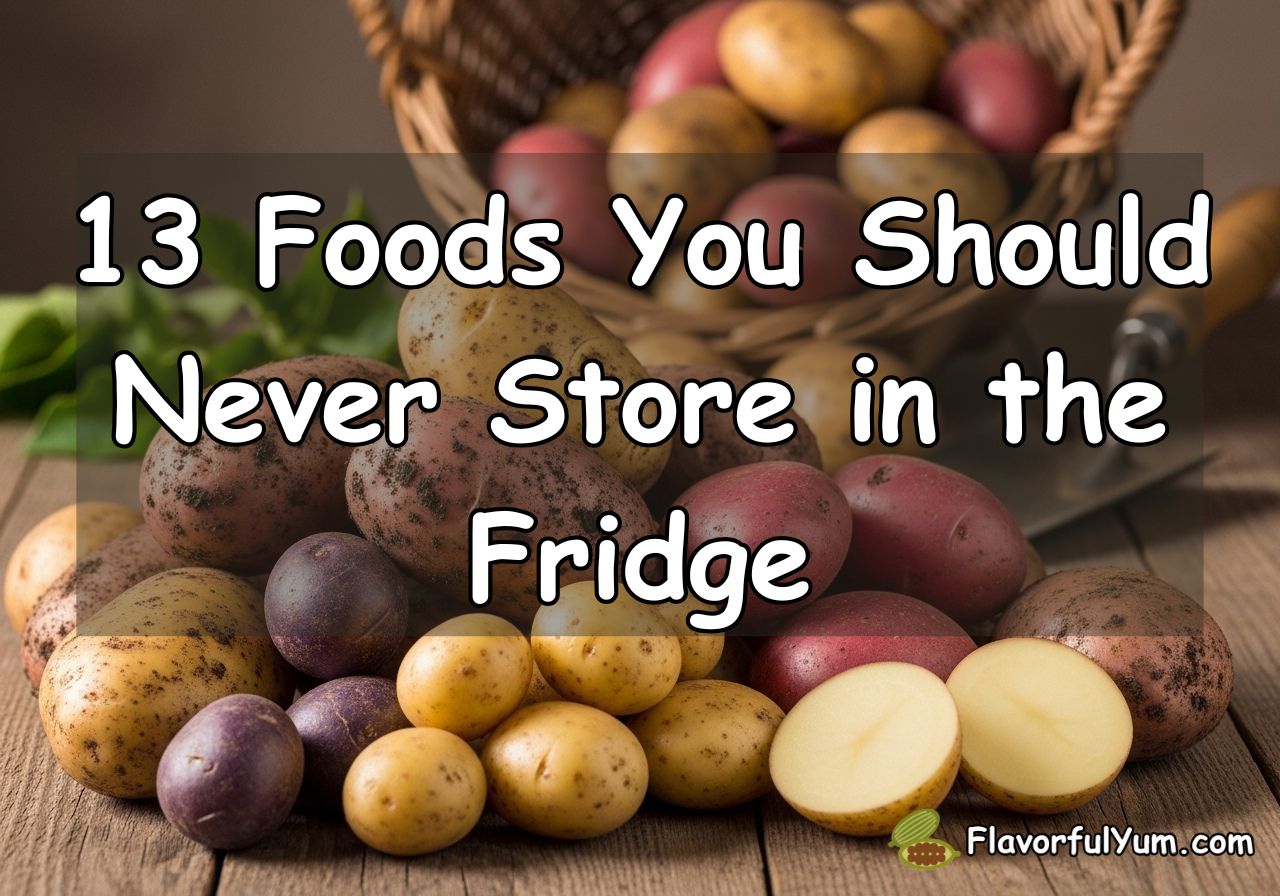
For a long time, I believed the fridge was the safest place for almost all food. If something felt important or expensive, I placed it inside without thinking. I assumed cold air always meant longer shelf life and better quality.
Over time, I learned that this habit actually damages many foods. Some foods lose flavor. Some change texture. Others spoil faster in cold air. The fridge is helpful, but it is not always the right place.
Many foods stay fresh longer at room temperature. They keep better taste, better smell, and better texture when stored the right way. Knowing where to store food helps reduce waste and improves how meals taste.
In this article, I share 13 foods you should never store in the fridge. These items stay better outside and perform best in cool, dry, and well-ventilated spaces.

1. Tomatoes
Tomatoes lose flavor in the fridge. Cold air breaks down the natural structure inside the tomato. This causes a soft and grainy texture.
When I store tomatoes on the counter, they stay juicy and sweet. The skin stays firm and smooth. The smell also stays fresh.
Tomatoes ripen best at room temperature. Cold stops the ripening process and damages flavor.
I keep tomatoes in a bowl away from direct sunlight.
2. Potatoes
Potatoes should stay out of the fridge. Cold temperature turns potato starch into sugar. This changes taste and texture.
Fridge potatoes become gritty and slightly sweet. They also turn brown faster when cooked.
Potatoes store best in a dark and cool place. A pantry or cupboard works well.
I keep them in a paper bag or basket for airflow.
3. Onions
Onions spoil faster in the fridge. Moisture makes them soft and moldy.
Cold air breaks down onion layers. This leads to slimy texture and strong smell.
Onions store best in dry air at room temperature.
I keep onions in a basket away from potatoes.
4. Garlic
Garlic does not like cold or moisture. The fridge causes garlic to sprout.
Cold air also makes garlic rubbery and bitter.
Garlic stays best in a dry and airy place.
I store garlic in a mesh bag or open bowl.
5. Bread
Bread dries out in the fridge. Cold air pulls moisture from the bread.
This causes hard texture and dull taste.
Bread stays soft longer at room temperature.
I keep bread in a sealed bag on the counter.
6. Honey
Honey never needs refrigeration. Cold makes honey thick and cloudy.
Honey already resists bacteria due to natural sugar content.
Fridge storage causes crystal formation.
I store honey in a cabinet with the lid closed.
7. Coffee
Coffee absorbs smells from the fridge. This ruins flavor.
Cold air also creates moisture inside coffee grounds.
This leads to stale taste and weak aroma.
I store coffee in an airtight container in a cabinet.
8. Olive Oil
Olive oil turns solid in the fridge. This changes texture and appearance.
Cold air makes olive oil cloudy and thick.
While this does not ruin safety, it affects quality.
I store olive oil in a dark bottle at room temperature.
9. Avocados
Unripe avocados stop ripening in the fridge. Cold slows the process.
This leads to hard fruit that never softens properly.
Avocados ripen best at room temperature.
I only refrigerate avocados after they fully ripen.
10. Bananas
Bananas hate cold. The skin turns dark in the fridge.
The fruit inside becomes mushy and bland.
Cold stops natural ripening.
I keep bananas on the counter away from sunlight.
11. Apples
Apples lose flavor in the fridge over time. Cold air dulls natural sweetness.
Moisture causes skin breakdown.
Apples store best in cool but dry spaces.
I keep apples in a fruit bowl or pantry.
12. Melons
Whole melons lose nutrients in the fridge. Cold damages natural structure.
Flavor becomes weak and watery.
Melons stay better at room temperature before cutting.
I only refrigerate melons after slicing.
13. Hot Sauce
Hot sauce does not need cold storage. Vinegar and salt preserve it naturally.
Cold dulls flavor and thickens texture.
Most hot sauces stay safe at room temperature for months.
I keep hot sauce in a cabinet near spices.
Why the Fridge Is Not Always Best?
The fridge controls bacteria growth, but it also affects enzymes and texture.
Some foods rely on room temperature to maintain taste.
Cold air slows natural processes like ripening and flavor development.
This changes how food feels and tastes when eaten.
How Cold Changes Food Quality?
Cold removes moisture from many foods.
This leads to dryness and dull flavor.
It also changes starch and sugar balance.
This affects sweetness, softness, and aroma.
Best Places to Store Non-Fridge Foods
I use these spaces:
- Pantry
- Kitchen cabinets
- Open shelves
- Storage baskets
- Paper bags
Dry and cool areas work best.
Signs Food Is Stored in the Wrong Place
Look for these signs:
- Mold growth
- Soft texture
- Weak smell
- Sticky surface
- Bitter taste
These signs often come from moisture or cold damage.
Food Waste and Storage Habits
Wrong storage leads to faster spoilage.
This increases waste and grocery spending.
Proper storage extends shelf life and quality.
Small changes save money and time.
My Simple Food Storage Rules
I follow these basic rules:
- Store produce in dry air.
- Avoid fridge for root vegetables.
- Keep oils away from cold.
- Use airtight containers.
- Read food labels when unsure.
These habits keep food fresh longer.
Fridge Myths I Believed Before
I used to think cold solved everything.
I stored bread, garlic, onions, and bananas in the fridge.
All of them lost quality fast.
Learning proper storage improved my meals.
How Proper Storage Improves Cooking?
Food tastes better.
Texture stays natural.
Smell stays fresh.
Cooking becomes easier.
Good storage supports better meals.
Final Thoughts
The fridge is useful, but it is not a universal solution. Many foods perform better at room temperature. They keep better taste, texture, and freshness outside cold air.
These 13 foods should never stay in the fridge. Storing them properly helps reduce waste and improves how food tastes.
Once I changed my storage habits, my kitchen felt more organized and my meals tasted better.
Simple knowledge leads to better food, better flavor, and better everyday cooking.

It’s Eliana Hazel. I’m a 33-year-old wife and mom of two from Tennessee who loves cooking fresh, simple meals for my family. I shop for veggies at Walmart, try new recipes, and add my own twist to make them special. When I’m not in the kitchen, I enjoy yoga, meditation, and catching up with my friends over green smoothies. Here, I share family-tested recipes, easy cooking tips, and a little inspiration to make your kitchen a happy place.
Related Posts



Previous Post
Next Post
Previous Post

Next Post


Hey, y’all! I’m Hazel!
I’m SO happy you’re here! I’m passionate about cooking fresh, homemade meals for my family and love sharing recipes that are simple, healthy, and full of flavor. Here on my blog, I believe in making food with love, experimenting with ingredients, and turning everyday meals into something special. In short, I believe that cooking at home brings families closer and makes life more joyful. >>> Learn more