
Now Reading: Knife Skills 101: How to Chop, Dice, and Mince Like a Pro
-
01
Knife Skills 101: How to Chop, Dice, and Mince Like a Pro
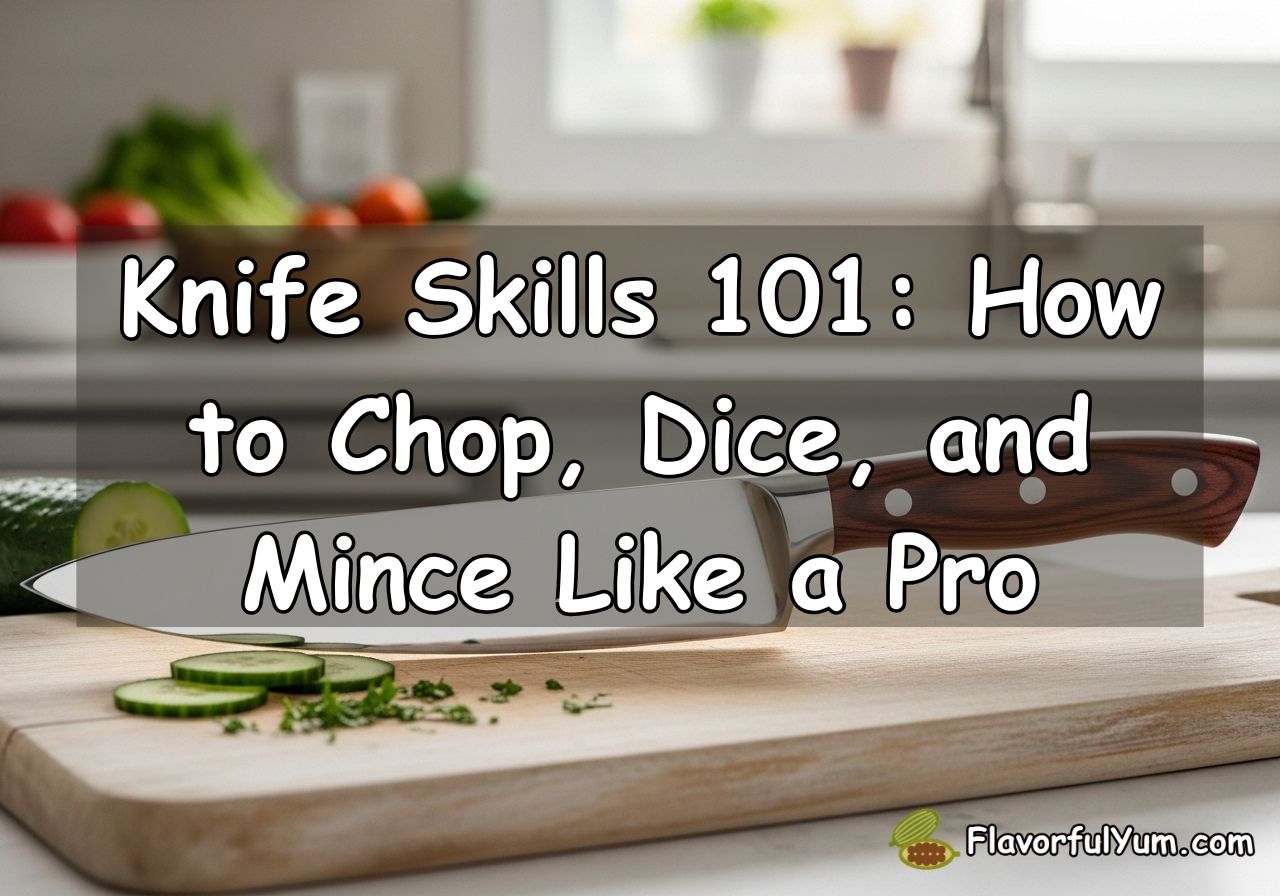
Learning knife skills can make cooking faster, safer, and more enjoyable. I remember when I first started, I often struggled with uneven cuts and slow prep. Over time, I discovered simple techniques that changed the way I cook. In this guide, I will show you how to chop, dice, and mince like a pro.
I will also share tips for safety, efficiency, and confidence in the kitchen. By the end, you will feel ready to handle vegetables, herbs, and more with precision.

Why Knife Skills Matter?
Good knife skills save time. I can prepare meals faster when I cut ingredients evenly. Even cuts also help food cook evenly. This prevents some pieces from burning while others remain raw.
Knife skills also improve safety. I feel more in control when handling knives. Proper technique reduces the risk of slipping and cuts.
Finally, knife skills make dishes look professional. I enjoy serving meals that look neat and inviting. Chopped vegetables, diced onions, and minced garlic all create a polished presentation.
Choosing the Right Knife
Choosing the right knife is the first step. I recommend starting with a chef’s knife. A chef’s knife is versatile and works for most tasks.
Other knives to consider include:
- Paring knife: small knife for peeling and trimming.
- Serrated knife: ideal for bread, tomatoes, and citrus.
- Santoku knife: similar to a chef’s knife, lighter and shorter.
Tips:
- Look for a knife with a comfortable handle.
- Keep knives sharp. A dull knife is more dangerous than a sharp one.
- Avoid using knives for tasks they are not designed for, like opening cans.
Knife Safety Basics
Safety is key when learning knife skills. I always focus on control and attention.
Here are some essential safety tips:
- Use a stable cutting board. A wet towel under the board prevents slipping.
- Curl your fingers. Keep fingertips tucked under when holding ingredients.
- Cut away from your body. Never push a knife toward yourself.
- Pay attention. Avoid distractions while chopping or slicing.
Following these rules helps me feel confident and reduces accidents.
How to Hold a Knife
Proper grip improves control. I hold the knife handle with my dominant hand. I place my thumb and index finger on either side of the blade near the handle. The remaining fingers wrap around the handle.
This grip provides stability and allows me to slice, chop, and dice efficiently.
I use my other hand to hold the ingredient. I curl my fingertips inward and rest the knife blade against my knuckles. This technique, called the claw grip, keeps fingers safe.
How to Chop?
Chopping means cutting food into pieces that are roughly the same size. I often chop vegetables like onions, peppers, and carrots for soups, stir-fries, and salads.
Steps to Chop:
- Wash and peel vegetables if needed.
- Cut the vegetable into manageable pieces. For example, halve a bell pepper.
- Place the vegetable on the cutting board with one flat side down.
- Hold the knife in the dominant hand. Curl fingertips of the other hand around the vegetable.
- Use a rocking motion to cut pieces. The tip of the knife stays on the board while the blade moves up and down.
Tips:
- Keep cuts even for uniform cooking.
- Use a sharp knife for clean cuts.
- Chop slowly at first until you feel comfortable.
How to Dice?
Dicing means cutting food into small, uniform cubes. I dice vegetables like onions, carrots, and celery for soups, stews, and sauces.
Steps to Dice:
- Chop the vegetable into slices or strips.
- Stack slices if possible.
- Cut the slices into even cubes.
- Adjust the size based on your recipe. Small dice works well for soups; larger dice works for roasting.
Tips:
- Keep the knife tip on the board for control.
- Use consistent motion and pressure.
- For onions, cut in half first, then slice vertically and horizontally before dicing.
How to Mince?
Mincing creates very small pieces. I often mince garlic, ginger, and herbs. Mincing releases flavor and helps ingredients blend smoothly into dishes.
Steps to Mince:
- Peel or trim the ingredient.
- Cut into thin slices or small pieces.
- Use a rocking motion to cut repeatedly until pieces are tiny.
- Gather pieces together and chop again if needed.
Tips:
- Use the side of the knife to crush garlic before mincing for easier cuts.
- Mincing herbs finely enhances flavor without large chunks.
- Keep your knife moving in a controlled rhythm.
Tips for Faster Prep
Good knife skills save time. I use a few tricks to prep ingredients faster:
- Prep in batches: Wash, peel, and chop all vegetables at once.
- Use a sharp knife: Dull knives slow you down and increase effort.
- Cut uniform pieces: Even pieces cook faster and evenly.
- Use a flat surface: Cut vegetables in halves or quarters to create stability.
- Organize ingredients: Keep everything within reach on the cutting board.
Common Mistakes to Avoid
Even experienced cooks make mistakes. I have learned to avoid these common errors:
- Rushing: Moving too fast increases risk of uneven cuts and accidents.
- Using a dull knife: A dull blade slips and squashes ingredients.
- Incorrect grip: Holding the knife too loosely reduces control.
- Not stabilizing the ingredient: Round vegetables can roll, increasing risk of cuts.
- Neglecting safety: Ignoring proper technique leads to accidents.
Knife Maintenance
Proper knife care keeps knives sharp and safe. I sharpen my knives regularly and store them safely.
Tips:
- Use a honing steel to maintain the edge between sharpenings.
- Hand wash knives with mild soap. Avoid dishwashers.
- Store knives in a block, on a magnetic strip, or with protective sheaths.
- Avoid cutting on hard surfaces like stone or glass; use wood or plastic boards.
Practicing Your Skills
Practice builds confidence. I started with simple vegetables and gradually tried harder ingredients like squash or cabbage. I focus on:
- Keeping cuts uniform
- Using the claw grip
- Maintaining a smooth rocking motion
I recommend practicing daily, even if it’s just five minutes. Over time, speed and precision improve.
Fun Knife Exercises
Here are exercises to improve skills:
- Onion slices: Practice thin slices and even dice.
- Herb mincing: Try mint, parsley, or cilantro.
- Carrot sticks: Practice chopping uniform sticks.
- Garlic mincing: Learn to crush and mince efficiently.
- Ginger slicing: Cut thin, even slices for cooking.
These exercises strengthen hand control and improve coordination.
Knife Skills for Recipes
Good knife skills enhance all types of recipes. I notice a difference in texture and flavor when vegetables are evenly cut.
- Soups: Even dice cooks faster and looks neat.
- Stir-fries: Uniform slices ensure quick, even cooking.
- Salads: Chopped vegetables are easier to mix and serve.
- Herb sauces: Minced herbs blend well for flavor without chunks.
Final Thoughts
Learning knife skills is worth the effort. I feel more confident, safe, and efficient in the kitchen. Chopping, dicing, and mincing become second nature with practice.
Start slow, focus on control, and gradually increase speed. Remember to sharpen your knives and maintain proper grip. With these skills, cooking becomes easier, faster, and more enjoyable.
I also enjoy sharing these techniques with family and friends. It’s satisfying to see others feel confident with knives too. Whether you cook daily or occasionally, mastering knife skills makes every meal better.

It’s Eliana Hazel. I’m a 33-year-old wife and mom of two from Tennessee who loves cooking fresh, simple meals for my family. I shop for veggies at Walmart, try new recipes, and add my own twist to make them special. When I’m not in the kitchen, I enjoy yoga, meditation, and catching up with my friends over green smoothies. Here, I share family-tested recipes, easy cooking tips, and a little inspiration to make your kitchen a happy place.
Related Posts


Previous Post
Next Post



Hey, y’all! I’m Hazel!
I’m SO happy you’re here! I’m passionate about cooking fresh, homemade meals for my family and love sharing recipes that are simple, healthy, and full of flavor. Here on my blog, I believe in making food with love, experimenting with ingredients, and turning everyday meals into something special. In short, I believe that cooking at home brings families closer and makes life more joyful. >>> Learn more