
Now Reading: Struggling with Vegan Meal Prep? Try This System
-
01
Struggling with Vegan Meal Prep? Try This System

Vegan meal prep can feel hard at first. I know this because I struggled with it too. I wasted food. I spent too much money. I felt bored with my meals. After many failed attempts, I built a simple system that works. Today, I want to share that system with you.
This guide gives you a clear plan. You will learn how to plan, shop, cook, and store vegan meals with less stress. You will save time. You will save money. You will eat better.
Let us begin.
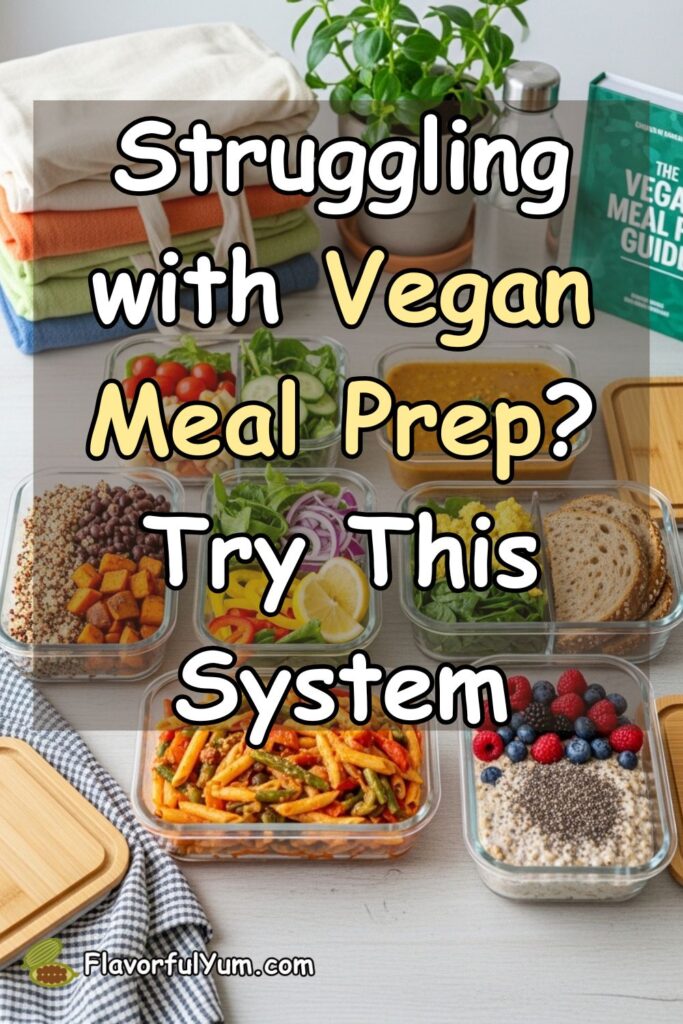
Why Vegan Meal Prep Feels Difficult?
Many people start with good intent. They buy random vegetables. They try new recipes each week. They cook large meals without a plan. Then problems appear.
You may face these common issues:
- You do not know what to cook.
- You buy too much fresh produce.
- Food spoils before you eat it.
- Meals taste bland after two days.
- You feel hungry after eating.
These problems happen because there is no system. A system creates structure. Structure reduces stress. When I started using a repeatable plan, everything changed.
The Simple Vegan Meal Prep System
This system has five clear steps:
- Choose a meal base.
- Pick protein sources.
- Add vegetables.
- Prepare sauces.
- Store meals correctly.
Each step has a purpose. Each step supports the next step.
Let me explain each one.
Step 1: Choose a Meal Base
A meal base gives your dish structure. I always choose two bases per week. This choice keeps variety without confusion.
Common vegan meal bases include:
- Brown rice
- Quinoa
- Whole wheat pasta
- Sweet potatoes
- Regular potatoes
- Couscous
- Rice noodles
I cook these bases in large batches. I store them in airtight containers in the fridge. Most grains stay fresh for four to five days.
When you cook grains in bulk, you save time. You also reduce daily effort.
Step 2: Pick Strong Plant Protein
Protein keeps you full. Protein supports muscle health. A good vegan meal prep plan includes at least two protein sources.
I rotate these options:
- Lentils
- Chickpeas
- Black beans
- Tofu
- Tempeh
- Edamame
- Vegan meat alternatives
I cook beans from dry form when I have time. I use canned beans when I feel busy. Both work well.
For tofu, I press it first. I remove excess water. Then I bake or pan-fry it with simple seasoning. This method improves texture.
I season proteins differently each week. One week I use garlic and paprika. The next week I use curry powder. Small changes prevent boredom.
Step 3: Add Fresh and Cooked Vegetables
Vegetables add color, fiber, and nutrients. I use a mix of cooked and raw vegetables. This mix gives texture and flavor contrast.
For cooked vegetables, I choose:
- Broccoli
- Carrots
- Zucchini
- Bell peppers
- Cauliflower
- Green beans
I roast vegetables on a sheet pan. I use olive oil, salt, and pepper. I roast at 400°F for about 20 to 25 minutes.
For raw vegetables, I choose:
- Spinach
- Arugula
- Cherry tomatoes
- Cucumbers
- Shredded cabbage
Raw vegetables work well in bowls and wraps. They add crunch and freshness.
I prepare vegetables on the same day I cook grains. I store them in separate containers.
Step 4: Make Simple Sauces
Sauce changes everything. Sauce prevents dry meals. Sauce creates variety without extra cooking.
I prepare one or two sauces per week. Here are simple options:
Tahini Lemon Sauce
- Tahini
- Lemon juice
- Garlic
- Salt
- Water
Peanut Sauce
- Peanut butter
- Soy sauce
- Lime juice
- Maple syrup
- Water
Vegan Pesto
- Basil
- Olive oil
- Garlic
- Nutritional yeast
- Nuts
Salsa
- Tomatoes
- Onion
- Lime
- Cilantro
- Salt
I store sauces in small jars. Most sauces stay fresh for five days.
When I build meals, I change the sauce. The base stays the same. The flavor feels new.
Step 5: Store Meals the Right Way
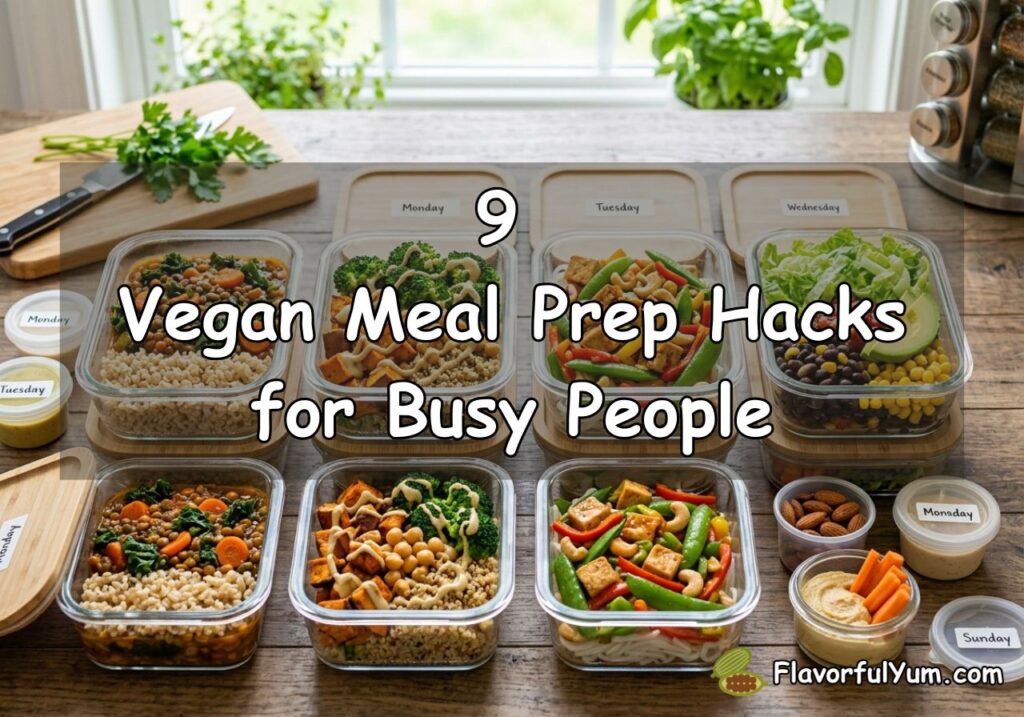
Storage affects taste and texture. I use glass containers with tight lids. I store ingredients separately when possible.
I keep:
- Grains in one container
- Protein in another
- Vegetables in another
- Sauce in a small jar
When I assemble meals later, food stays fresher. Vegetables do not become soggy.
I label containers with the date. I place older items in front. This habit reduces waste.
How do I Build Meals During the Week?
During the week, I mix and match.
Example 1:
- Brown rice
- Roasted broccoli
- Baked tofu
- Tahini lemon sauce
Example 2:
- Quinoa
- Black beans
- Raw spinach
- Salsa
Example 3:
- Sweet potatoes
- Chickpeas
- Roasted peppers
- Peanut sauce
These combinations take five minutes to assemble. I reheat grains and protein. I add fresh vegetables and sauce after heating.
This method gives variety without extra work.
Grocery List Example
Here is a simple weekly shopping list based on this system:
Grains:
- Brown rice
- Quinoa
Protein:
- Tofu
- Chickpeas
- Black beans
Vegetables:
- Broccoli
- Bell peppers
- Carrots
- Spinach
- Cherry tomatoes
Sauce ingredients:
- Tahini
- Lemons
- Garlic
- Peanut butter
- Soy sauce
Pantry:
- Olive oil
- Salt
- Pepper
- Spices
This list stays focused. It avoids impulse buys. It reduces waste.
Time-Saving Tips I Use
I follow these habits every week:
- I cook grains in a rice cooker.
- I roast vegetables on two trays at once.
- I line trays with parchment paper.
- I wash produce before storing it.
- I prep on Sunday afternoon.
Meal prep takes about two hours. The rest of my week feels easier.
How to Prevent Flavor Fatigue?
Many people quit meal prep because they feel bored. I prevent boredom in three ways:
- I change spices each week.
- I rotate sauces.
- I try one new vegetable per week.
Small changes create excitement. The system stays stable.
Budget Benefits of Vegan Meal Prep
Vegan staples cost less than many animal products. Rice, beans, and lentils offer strong value.
When I follow this system:
- I eat out less.
- I waste less food.
- I buy fewer processed meals.
I notice clear savings each month.
Nutrition Balance in Vegan Meal Prep
A balanced vegan meal includes:
- Complex carbohydrates
- Plant protein
- Healthy fats
- Fiber
- Vitamins and minerals
Grains provide carbohydrates. Beans and tofu provide protein. Nuts and seeds provide fats. Vegetables provide fiber and micronutrients.
If you feel low energy, check portion size. You may need more calories. Many people under-eat at first.
Common Mistakes to Avoid
I made these mistakes early on:
- I cooked too many recipes.
- I ignored protein.
- I skipped seasoning.
- I stored everything in one container.
- I prepped meals I did not enjoy.
Now I keep meals simple. I cook food I like. I focus on flavor.
Sample 5-Day Vegan Meal Plan
Here is a simple example:
Monday
Lunch: Quinoa bowl with chickpeas and roasted broccoli
Dinner: Brown rice with tofu and peanut sauce
Tuesday
Lunch: Sweet potato bowl with black beans and spinach
Dinner: Quinoa with roasted vegetables and tahini sauce
Wednesday
Lunch: Brown rice with chickpeas and salsa
Dinner: Tofu stir-fry with vegetables
Thursday
Lunch: Leftover quinoa bowl with fresh tomatoes
Dinner: Sweet potato with black beans and peanut sauce
Friday
Lunch: Brown rice bowl with tofu and roasted carrots
Dinner: Mix remaining ingredients into a large salad
This plan uses the same ingredients in new ways.
Why This System Works?
This system works because it reduces decision fatigue. You make key choices once. You reuse ingredients in smart combinations.
The system also supports flexibility. If tofu runs out, use beans. If spinach wilts, cook it. Nothing goes to waste.
I feel calm when I open my fridge. I see options. I see structure. I see effort that supports my goals.
Final Thoughts
If vegan meal prep feels overwhelming, simplify your approach. Use this five-step system:
- Pick two meal bases.
- Choose two protein sources.
- Prepare mixed vegetables.
- Make one or two sauces.
- Store everything properly.
You do not need complicated recipes. You need structure and repetition.
Start small. Prep for three days instead of seven. Build confidence first.
I believe you can make vegan meal prep easy and enjoyable. I did, and you can too.

It’s Eliana Hazel. I’m a 33-year-old wife and mom of two from Tennessee who loves cooking fresh, simple meals for my family. I shop for veggies at Walmart, try new recipes, and add my own twist to make them special. When I’m not in the kitchen, I enjoy yoga, meditation, and catching up with my friends over green smoothies. Here, I share family-tested recipes, easy cooking tips, and a little inspiration to make your kitchen a happy place.
Related Posts
Previous Post
Next Post
Previous Post

Next Post


Hey, y’all! I’m Hazel!
I’m SO happy you’re here! I’m passionate about cooking fresh, homemade meals for my family and love sharing recipes that are simple, healthy, and full of flavor. Here on my blog, I believe in making food with love, experimenting with ingredients, and turning everyday meals into something special. In short, I believe that cooking at home brings families closer and makes life more joyful. >>> Learn more