
Now Reading: 5 Essential Vitamins and Minerals to Include in Your Morning Meal
-
01
5 Essential Vitamins and Minerals to Include in Your Morning Meal
5 Essential Vitamins and Minerals to Include in Your Morning Meal
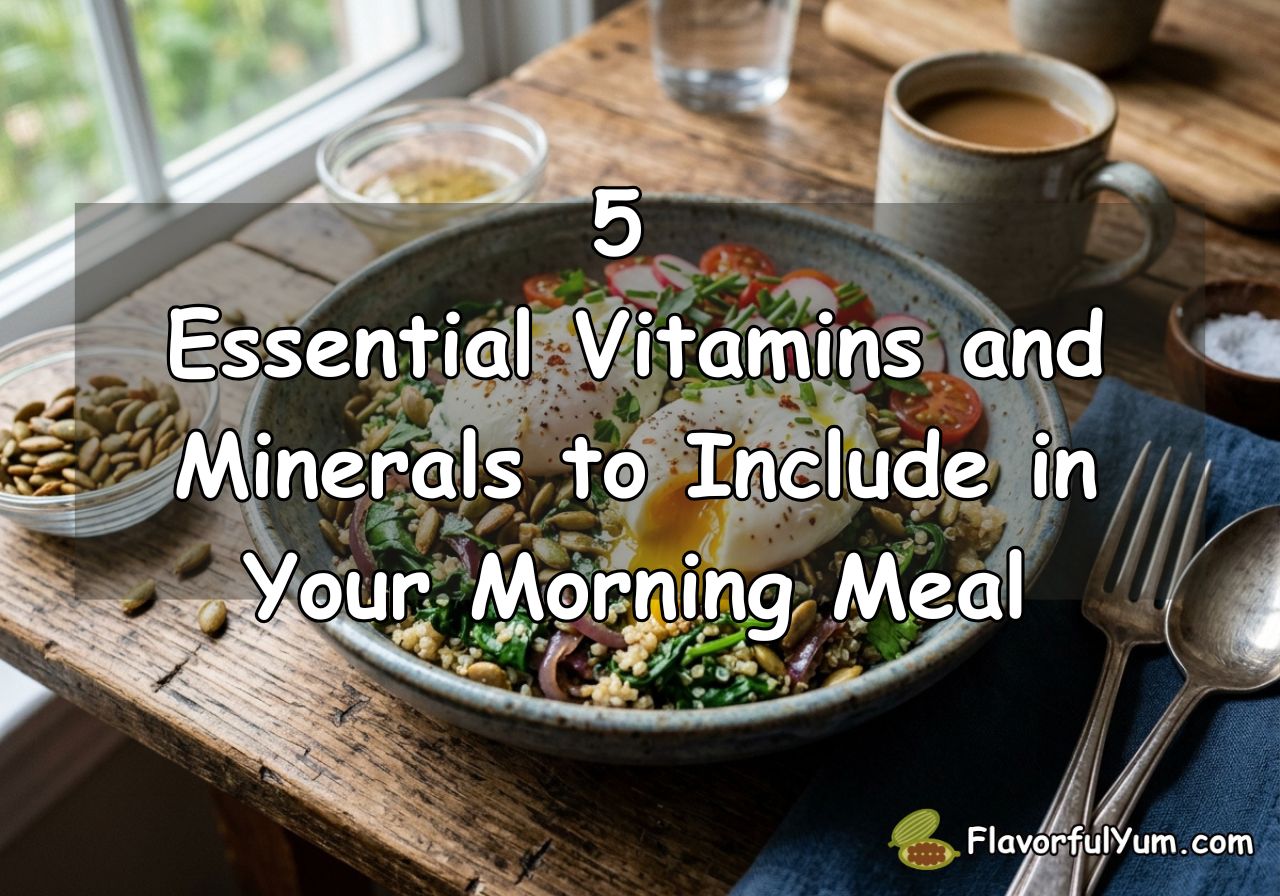
What you eat in the first hour after waking sets the nutritional foundation for everything that follows. Your body spends the night in repair and recovery mode — burning through stored nutrients, rebuilding tissue, and regulating hormones. By morning, specific vitamins and minerals are depleted and need replenishment before cognitive function, energy production, and immune defense can operate at full capacity.
These five nutrients deserve a place in your morning meal every single day — and the two recipes below deliver all of them simultaneously.
Vitamin D — The Morning Nutrient Most People Are Deficient In
Vitamin D deficiency affects an estimated one billion people globally — making it the most widespread nutritional deficiency in the world. Most people know sun exposure produces vitamin D, but few realize that the morning meal provides the most consistent opportunity to supplement what sunlight alone cannot reliably deliver year-round.
Vitamin D regulates calcium absorption in the gut — without adequate vitamin D, calcium consumed through food cannot be properly absorbed regardless of how much you eat. It supports immune cell function, influences insulin secretion, and plays a role in mood regulation through its interaction with serotonin synthesis pathways. Research consistently connects vitamin D deficiency with fatigue, low mood, impaired immune response, and reduced bone density.
Best morning food sources: Eggs — particularly the yolk — wild-caught salmon, canned tuna, and fortified plant milks. One whole egg provides approximately 6% of daily vitamin D requirements. Two eggs alongside fortified oat milk covers approximately 25% before the day has properly started.
Magnesium — The Mineral That Activates Over 300 Enzymes
Magnesium participates in over 300 enzymatic reactions in the human body — more than any other mineral. These reactions include energy production from ATP, protein synthesis, muscle and nerve function, blood glucose regulation, and blood pressure maintenance. Despite this central role, surveys consistently show that 50–60% of adults in developed countries consume less magnesium than their recommended daily intake.
The consequences of chronic low magnesium intake develop slowly and manifest as muscle cramps, persistent fatigue, poor sleep quality, elevated blood pressure, and increased anxiety — symptoms that frequently get attributed to other causes while the underlying nutritional deficiency continues.
Morning is the optimal time to consume magnesium because it supports the energy production pathways that fuel the entire day’s cognitive and physical activity. Consuming it alongside protein and fat improves absorption compared to taking it alone.
Best morning food sources: Pumpkin seeds deliver 37% of daily magnesium requirements per 28g serving — making them one of the single most magnesium-dense foods available. Almonds, cashews, hemp seeds, oats, and dark leafy greens all provide significant magnesium at quantities achievable in a standard breakfast.
Vitamin C — The Antioxidant That Works Better in the Morning
Vitamin C is water-soluble and cannot be stored in the body for more than a few hours. This means consistent daily intake — ideally spread across multiple meals — is required to maintain tissue levels sufficient for its many functions.
Consuming vitamin C in the morning matters for two specific reasons. First, it significantly enhances non-heme iron absorption — the plant-based iron form found in oats, seeds, and legumes — when eaten simultaneously. Second, it supports cortisol metabolism in the adrenal glands which are most active in the morning hours, helping to regulate the natural cortisol peak that occurs within thirty minutes of waking.
Vitamin C also synthesizes collagen, supports immune cell production, protects cells from oxidative stress, and enhances the absorption of several other morning nutrients including iron and zinc.
Best morning food sources: One medium kiwi provides 93% of daily vitamin C requirements. Strawberries, oranges, red bell peppers, and papaya all deliver over 50% of daily requirements per standard serving. Adding any of these to a morning bowl delivers vitamin C at quantities that meaningfully affect iron absorption from every other ingredient in the meal.
Iron — Essential for Oxygen Transport and Morning Energy
Iron deficiency is the most common nutritional deficiency worldwide. Its symptoms — fatigue, difficulty concentrating, reduced physical endurance, and pale skin — directly undermine morning productivity and sustained daily energy. Consuming iron at breakfast rather than later in the day takes advantage of the body’s higher absorption capacity earlier in the digestive cycle.
Iron exists in two forms with different absorption rates. Heme iron from animal sources absorbs at 15–35% efficiency. Non-heme iron from plant sources absorbs at 2–20% efficiency depending significantly on what else is eaten simultaneously. Consuming vitamin C alongside non-heme iron sources can increase absorption by up to 300% — making the combination of iron-rich and vitamin C-rich foods at breakfast one of the most impactful nutritional pairings available.
Best morning food sources: Fortified oats provide 20% of daily iron requirements per serving. Pumpkin seeds, hemp seeds, spinach, and eggs all provide meaningful iron quantities that accumulate toward daily targets when consumed consistently.
B12 — The Energy Vitamin With No Plant Food Sources
Vitamin B12 is unique among essential vitamins — it exists in bioavailable form only in animal products and certain fortified foods. Plant-based eaters who don’t supplement or consume fortified foods develop B12 deficiency with significant neurological consequences including nerve damage, cognitive impairment, and megaloblastic anemia.
B12 supports red blood cell formation, myelin sheath maintenance around nerve fibers, DNA synthesis, and energy metabolism. Its deficiency produces fatigue and cognitive fog that closely resembles other deficiency states — making accurate diagnosis difficult without blood testing.
Best morning food sources: Two whole eggs provide approximately 25% of daily B12 requirements. Fortified oat milk, nutritional yeast, and fortified cereals provide plant-based B12. Animal eaters can meet daily requirements easily through eggs and dairy at breakfast. Plant-based eaters should ensure at least one fortified food appears in their morning meal daily.
2 Breakfast Recipes That Deliver All Five Nutrients
Recipe 1: Pumpkin Seed and Spinach Egg Bowl
Ingredients:
- 3 large eggs
- 2 cups baby spinach
- 2 tbsp pumpkin seeds
- ½ cup cherry tomatoes, halved
- 1 tbsp olive oil
- ¼ tsp smoked paprika
- Salt and black pepper to taste
- 1 kiwi, sliced for serving (vitamin C to enhance iron absorption)
- 1 tbsp hemp seeds for topping
Instructions:
- Heat olive oil in a non-stick pan over medium heat
- Add cherry tomatoes and cook for 2 minutes until they begin to blister
- Add baby spinach and stir for 60 seconds until completely wilted
- Push vegetables to the side of the pan and crack eggs into the cleared space
- Season eggs with smoked paprika, salt, and pepper
- Cook eggs to your preferred style — scrambled takes 3 minutes, fried takes 3–4 minutes
- Transfer to a bowl and scatter pumpkin seeds and hemp seeds over the top
- Serve with sliced kiwi alongside — the kiwi’s vitamin C enhances iron absorption from the spinach and pumpkin seeds by up to 300%
Nutrient coverage: Eggs provide vitamin D and B12. Spinach provides iron and magnesium. Pumpkin seeds provide magnesium and iron. Kiwi provides vitamin C. One bowl covers all five essential morning nutrients.
Recipe 2: Fortified Oat Bowl With Seeds and Strawberries
Ingredients:
- 1 cup rolled oats cooked in fortified oat milk
- 1 cup fresh strawberries, sliced
- 2 tbsp pumpkin seeds
- 1 tbsp hemp seeds
- 1 tbsp chia seeds
- 1 tbsp almond butter
- 1 tsp honey
- ½ tsp cinnamon
- Pinch of salt
Instructions:
- Cook rolled oats in fortified oat milk according to package instructions — using oat milk rather than water adds vitamin D and B12 that plain oats don’t contain
- Stir cinnamon and a pinch of salt into the cooked oats
- Transfer to a wide bowl and create a slight hollow in the center
- Dollop almond butter into the hollow and let it soften for 30 seconds in the warm oats
- Arrange sliced strawberries across one half of the bowl
- Scatter pumpkin seeds, hemp seeds, and chia seeds over the other half
- Drizzle honey over the entire bowl in a thin line
- Serve immediately while warm
Nutrient coverage: Fortified oat milk provides vitamin D and B12. Oats provide iron and magnesium. Pumpkin seeds amplify both iron and magnesium significantly. Strawberries provide vitamin C that triples iron absorption from the oats and seeds. All five morning nutrients in one bowl.
Final Thoughts
Morning nutrition determines afternoon energy, cognitive clarity, and immune resilience in ways that no supplement protocol fully replicates. Vitamin D, magnesium, vitamin C, iron, and B12 work together through interconnected pathways — consuming them simultaneously produces absorption synergies that isolated intake cannot.
Both recipes above deliver all five nutrients through whole food sources in under fifteen minutes. Start with whichever fits your current breakfast routine most naturally and build from there.

It’s Eliana Hazel. I’m a 33-year-old wife and mom of two from Tennessee who loves cooking fresh, simple meals for my family. I shop for veggies at Walmart, try new recipes, and add my own twist to make them special. When I’m not in the kitchen, I enjoy yoga, meditation, and catching up with my friends over green smoothies. Here, I share family-tested recipes, easy cooking tips, and a little inspiration to make your kitchen a happy place.
Related Posts



Previous Post
Next Post



Hey, y’all! I’m Hazel!
I’m SO happy you’re here! I’m passionate about cooking fresh, homemade meals for my family and love sharing recipes that are simple, healthy, and full of flavor. Here on my blog, I believe in making food with love, experimenting with ingredients, and turning everyday meals into something special. In short, I believe that cooking at home brings families closer and makes life more joyful. >>> Learn more