
Now Reading: Types of Kitchen Knives and Their Uses (Safety Included)
-
01
Types of Kitchen Knives and Their Uses (Safety Included)

A good knife is the most important tool in any kitchen. When I first started cooking, I had one old knife and struggled with chopping, slicing, and dicing. Over time, I learned that different knives serve different purposes, and using the right knife makes cooking faster, safer, and more enjoyable.
Kitchen knives come in various shapes and sizes. Each is designed for specific tasks, from slicing bread to filleting fish. Understanding the types of knives and how to use them correctly also helps prevent accidents in the kitchen.
In this guide, I will explain the most common types of kitchen knives, their uses, and important safety tips every beginner should follow.
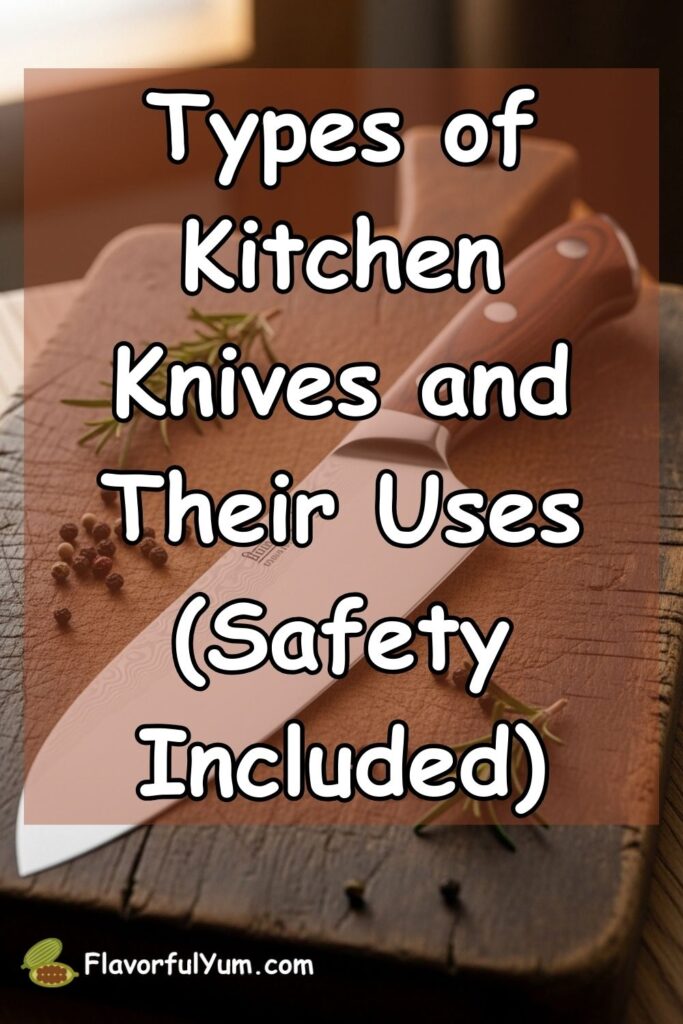
Chef’s Knife
The chef’s knife is the most versatile knife in the kitchen. It usually measures 8 to 10 inches. I use it for chopping vegetables, slicing meat, and mincing herbs.
Its wide, tapered blade allows rocking motion while cutting. This motion makes chopping faster and more efficient.
When using a chef’s knife, safety matters. I always curl my fingers on the guiding hand, keeping fingertips tucked under while holding the food. This prevents accidental cuts.
A sharp chef’s knife is safer than a dull one because it requires less force, reducing the chance of slipping.
Paring Knife
A paring knife is small, usually 3 to 4 inches long. I use it for peeling, trimming, and precise cutting. It’s perfect for tasks like removing seeds from peppers or slicing small fruits.
Paring knives are also useful for decorative cuts and intricate tasks. I find it much easier to handle small foods with a small knife.
Safety tip: Use a stable cutting surface and avoid cutting toward yourself. A paring knife is sharp, and even small slips can cause injury.
Serrated Knife
Serrated knives have teeth along the edge. I use them for cutting foods with tough crusts or skins, such as bread, tomatoes, and citrus.
The teeth grip the surface and allow clean cuts without squishing the food. I especially like using a serrated knife for crusty bread, which can tear easily with a straight blade.
Safety tip: Always use a cutting board and keep fingers clear of the blade. Serrated knives are sharp and can cause serious cuts if misused.
Utility Knife
A utility knife is mid-sized, around 5 to 7 inches long. I use it for slicing sandwiches, small meats, and vegetables when a chef’s knife feels too large.
It is more versatile than a paring knife but easier to control than a large chef’s knife.
Safety tip: Keep the blade sharp and store the knife properly. A dull utility knife can slip and lead to accidents.
Boning Knife
A boning knife has a thin, flexible blade. I use it to remove bones from meat, poultry, and fish. Its flexibility helps maneuver around bones and joints.
Boning knives allow precise cuts, reducing waste when trimming meat.
Safety tip: Always cut away from your body. Keep the guiding hand on top of the food, not under it, to prevent injuries.
Fillet Knife
Fillet knives are long, narrow, and very flexible. I use them specifically for filleting fish. The thin blade follows the bone, giving clean fillets.
A fillet knife requires care because it bends easily. I handle it slowly to maintain control and avoid slipping.
Safety tip: Cut on a non-slip surface, and make slow, steady movements. Do not rush with flexible knives.
Cleaver
A cleaver is large, heavy, and rectangular. I use it for chopping through bones and tough vegetables. Its weight allows it to cut with minimal force.
Despite its size, a cleaver can also be used for crushing garlic or ginger with the flat side.
Safety tip: Keep the blade away from hands and fingers. Use a stable cutting board, and always focus when chopping hard foods.
Santoku Knife
The Santoku knife is similar to a chef’s knife but shorter and thinner, usually 5 to 7 inches. It comes from Japanese cooking and works well for slicing, dicing, and mincing.
I like the Santoku for vegetables and boneless meats. Its flat edge allows precise cuts and less rocking motion.
Safety tip: Use the same finger-curl technique as with a chef’s knife. Keep the blade sharp to prevent slipping.
Bread Knife
Bread knives are long, serrated knives. I use them only for bread, cakes, and soft foods with crusts.
Serrated edges prevent squashing soft bread while cutting. I also use a bread knife to slice tomatoes or citrus when needed.
Safety tip: Cut slowly and steadily. Avoid pressing hard, as serrated knives do the work with minimal force.
Cheese Knife
Cheese knives are specialized knives with holes or notches in the blade. These prevent soft cheese from sticking.
I use cheese knives for brie, cheddar, and soft cheeses. They make clean slices and keep the cheese from crumbling.
Safety tip: Hold cheese firmly on a cutting board. Slice away from fingers and never use excessive force.
Steak Knife
Steak knives are small, sharp knives used at the table. I keep them for cutting cooked meats like steak, chicken, or pork.
They are sharp enough to cut easily without heavy pressure. Some have serrated edges; others are straight.
Safety tip: Teach family members to handle steak knives carefully, especially children.
Knife Safety Tips
Knowing knives is important, but using them safely is essential.
- Keep knives sharp: Dull knives require more force and slip easily.
- Use a stable cutting board: Prevents accidents from wobbling surfaces.
- Curl fingers when chopping: Fingertips tucked under reduce the chance of cuts.
- Cut away from the body: Always direct the blade away from hands and torso.
- Store knives safely: Knife blocks, magnetic strips, or blade guards prevent accidents.
- Clean carefully: Wash knives individually. Avoid leaving them in a sink.
- Focus while cutting: Avoid distractions. Even experienced cooks make mistakes when rushed.
Following these rules keeps the kitchen safe for beginners and experienced cooks alike.
Choosing the Right Knife
I choose knives based on comfort and intended use. A good knife should feel balanced in hand and match the task.
I test grip and weight before buying. Heavy knives work well for chopping, while lighter knives are better for precision tasks.
Investing in quality knives improves cooking speed, efficiency, and safety. Cheap knives often slip or dull quickly, increasing risk.
Caring for Your Knives
Proper care keeps knives sharp and safe.
- Hand wash only: Dishwashers damage blades and handles.
- Dry immediately: Prevents rust and corrosion.
- Sharpen regularly: Use a sharpening stone or steel to maintain the edge.
- Store properly: Use blocks, magnetic strips, or blade covers.
Good care prolongs knife life and ensures safety in the kitchen.
Building a Basic Knife Set
For beginners, I recommend starting with a few essential knives:
- Chef’s knife (8–10 inches)
- Paring knife (3–4 inches)
- Serrated knife (bread or utility)
Optional additions as skills grow:
- Boning knife
- Santoku knife
- Cleaver
A basic set covers most cooking needs while keeping costs manageable.
Real-Life Example
When I first learned to cook, I used one dull knife. Chopping vegetables took too long, and I cut myself multiple times.
Once I invested in a sharp chef’s knife and learned finger-curl technique, cooking became faster and safer. I also enjoyed preparing meals more because cutting ingredients became easier.
This taught me that understanding knives and safety transforms the cooking experience.
Final Thoughts
Kitchen knives are essential tools, but each has a specific purpose. Chef’s knives, paring knives, serrated knives, and specialty knives like boning or fillet knives help create meals faster, safer, and more efficiently.
Knife safety is equally important. Sharp blades, stable surfaces, correct grip, and careful cutting prevent accidents. Proper care and storage keep knives effective and safe for years.
By learning the types of knives, their uses, and practicing safety, beginners can cook with confidence. The right knife makes cooking easier, more enjoyable, and safe, turning any kitchen into a productive workspace.

It’s Eliana Hazel. I’m a 33-year-old wife and mom of two from Tennessee who loves cooking fresh, simple meals for my family. I shop for veggies at Walmart, try new recipes, and add my own twist to make them special. When I’m not in the kitchen, I enjoy yoga, meditation, and catching up with my friends over green smoothies. Here, I share family-tested recipes, easy cooking tips, and a little inspiration to make your kitchen a happy place.
Related Posts

Previous Post
Next Post
Previous Post

Next Post


Hey, y’all! I’m Hazel!
I’m SO happy you’re here! I’m passionate about cooking fresh, homemade meals for my family and love sharing recipes that are simple, healthy, and full of flavor. Here on my blog, I believe in making food with love, experimenting with ingredients, and turning everyday meals into something special. In short, I believe that cooking at home brings families closer and makes life more joyful. >>> Learn more