
Now Reading: 15 Food Storage Mistakes That Are Ruining Your Groceries
-
01
15 Food Storage Mistakes That Are Ruining Your Groceries
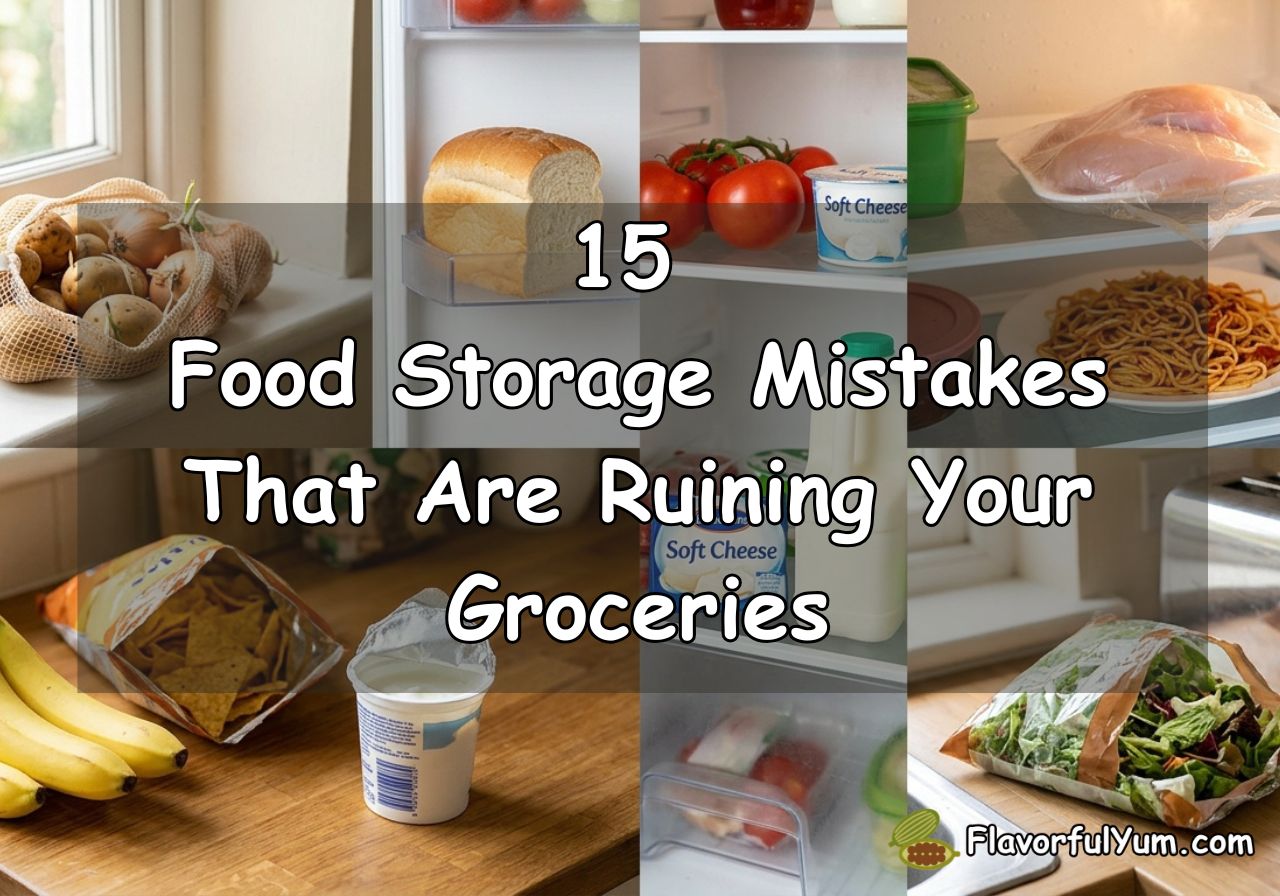
Food waste often starts with poor storage habits. Many people buy fresh groceries but store them the wrong way. This mistake causes food to spoil faster. I learned that proper storage helps food stay fresh, safe, and tasty.
When I changed my storage habits, I noticed two clear results. My groceries lasted longer, and I saved money. Good storage also protects nutrients and flavor.
In this guide, I share fifteen food storage mistakes that often ruin groceries. I also explain simple fixes that work in any kitchen.
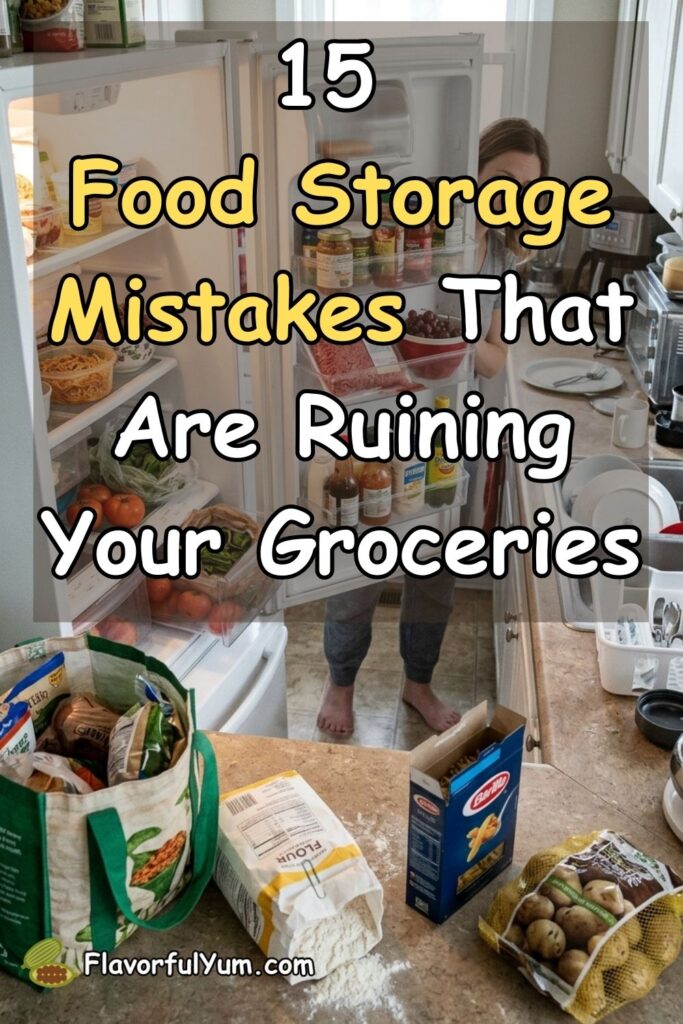
1. Storing All Fruits in the Refrigerator
Many fruits lose flavor in cold temperatures. Some fruits also develop a dull texture in the fridge.
Bananas, mangoes, and peaches prefer room temperature. Cold air slows ripening but also harms taste.
Fix
I keep these fruits on the counter until they ripen. After ripening, I place them in the fridge if I need extra storage time.
2. Washing Produce Too Early
Many people wash fruits and vegetables right after buying them. Extra moisture encourages mold and bacteria.
Wet produce spoils faster in the fridge.
Fix
I wash produce only before eating or cooking. I store fruits and vegetables dry in the refrigerator.
3. Storing Bread in the Refrigerator
Cold temperatures make bread stale faster. The fridge changes the structure of bread starch.
This change causes bread to harden.
Fix
I store bread at room temperature in a bread box or sealed bag. If I need long storage, I freeze it.
4. Keeping Tomatoes in the Refrigerator
Cold air harms the flavor and texture of tomatoes. Refrigeration slows ripening and creates a mealy texture.
Tomatoes taste best when stored at room temperature.
Fix
I keep tomatoes on the kitchen counter. I place them stem side down to reduce moisture loss.
5. Storing Potatoes in Bright Light
Light triggers chemical changes in potatoes. This reaction produces a green color and a bitter taste.
Green potatoes may also contain harmful compounds.
Fix
I store potatoes in a cool, dark place. A pantry or cupboard works well.
6. Storing Onions and Potatoes Together
Onions release gases and moisture. These gases speed up spoilage in nearby foods.
Potatoes absorb this moisture and spoil faster.
Fix
I store onions and potatoes in separate baskets with good air flow.
7. Ignoring Refrigerator Temperature
Many refrigerators run at the wrong temperature. Warm temperatures allow bacteria growth.
Food safety experts suggest a refrigerator temperature near 4°C or 40°F.
Fix
I use a fridge thermometer to check the temperature. I adjust the settings when needed.
8. Overcrowding the Refrigerator
Air must move freely inside the refrigerator. Too many items block airflow and create uneven cooling.
Some foods stay warm and spoil early.
Fix
I leave space between containers. This habit helps cold air move around food.
9. Leaving Herbs Loose in the Fridge
Fresh herbs dry out quickly in cold air. Leaves lose moisture and wilt.
Many people store herbs without protection.
Fix
I treat herbs like flowers. I place stems in a jar with water. I cover the leaves loosely with a plastic bag.
10. Using the Refrigerator Door for Milk
The refrigerator door faces frequent temperature changes. Warm air enters each time the door opens.
Milk and dairy spoil faster in this area.
Fix
I store milk on the middle shelf. This area keeps a steady temperature.
11. Storing Apples Next to Other Produce
Apples release ethylene gas. This gas speeds up ripening in nearby fruits and vegetables.
Sensitive foods spoil faster when exposed to this gas.
Fix
I store apples in a separate drawer or container.
12. Keeping Raw Meat on Upper Shelves
Raw meat can leak juices. These juices may drip onto other foods.
This problem increases the risk of contamination.
Fix
I store raw meat on the lowest shelf. I place it in a sealed container to prevent leaks.
13. Using the Wrong Storage Containers
Open containers expose food to air and moisture. Air speeds up oxidation and spoilage.
Plastic bags also trap moisture in some cases.
Fix
I use airtight containers for leftovers and fresh ingredients. Glass containers work well because they do not absorb odors.
14. Storing Leafy Greens Without Protection
Leafy greens lose moisture quickly. Dry air in the refrigerator causes wilting.
Loose greens often become limp within a few days.
Fix
I wrap greens in a dry paper towel. Then I place them in a breathable bag or container.
15. Ignoring Expiration Dates and Rotation
Many people place new groceries in front of older items. Older food then sits unused and spoils.
Food rotation helps prevent waste.
Fix
I follow the “first in, first out” method. I place older items at the front of shelves.
Simple Food Storage Habits I Use Every Week
Small habits can protect groceries and reduce waste. I follow a few simple rules in my kitchen.
1. I check my refrigerator once each week.
This habit helps me track food before it spoils.
2. I label leftovers with dates.
Clear labels help me know when to eat food.
3. I use clear containers.
Clear containers allow me to see food quickly.
4. I plan meals around fresh ingredients.
This step prevents forgotten produce.
5. I freeze food when needed.
Freezing stops spoilage and saves extra food.
Foods That Need Special Storage Attention
Some foods require extra care during storage. I pay close attention to these items because they spoil quickly.
Berries
Berries grow mold quickly. I store them in the refrigerator in a breathable container. I wash them only before eating.
Leafy Greens
Spinach, lettuce, and kale lose moisture quickly. A paper towel inside the container helps absorb extra moisture.
Avocados
Unripe avocados stay on the counter. After ripening, I store them in the refrigerator.
Cheese
Cheese requires airflow. I wrap it in wax paper or parchment paper instead of plastic wrap.
Eggs
Eggs stay fresh longer inside the carton. The carton protects them from odor absorption.
Why Proper Food Storage Matters?
Good food storage protects health and nutrition. Spoiled food may contain harmful bacteria. Proper storage also helps maintain flavor and texture.
When I improved my storage habits, I noticed clear benefits.
- My groceries lasted longer.
- I wasted less food.
- My meals tasted fresher.
- I saved money during grocery trips.
Small storage changes create a big difference in the kitchen.
Final Thoughts
Food storage mistakes happen in many homes. Simple habits often cause food to spoil early. I made several of these mistakes before I learned better storage methods.
Now I follow clear rules for storing fruits, vegetables, dairy, and leftovers. These habits keep my groceries fresh and safe.
You can start with small changes today. Separate produce that releases gas. Store food at proper temperatures. Use airtight containers.
Each small step protects your groceries. Over time, these habits reduce waste and improve the quality of your meals.

It’s Eliana Hazel. I’m a 33-year-old wife and mom of two from Tennessee who loves cooking fresh, simple meals for my family. I shop for veggies at Walmart, try new recipes, and add my own twist to make them special. When I’m not in the kitchen, I enjoy yoga, meditation, and catching up with my friends over green smoothies. Here, I share family-tested recipes, easy cooking tips, and a little inspiration to make your kitchen a happy place.
Related Posts

Previous Post
Next Post

Hey, y’all! I’m Hazel!
I’m SO happy you’re here! I’m passionate about cooking fresh, homemade meals for my family and love sharing recipes that are simple, healthy, and full of flavor. Here on my blog, I believe in making food with love, experimenting with ingredients, and turning everyday meals into something special. In short, I believe that cooking at home brings families closer and makes life more joyful. >>> Learn more