
Now Reading: How Low-Calorie Recipes Can Improve Your Metabolism?
-
01
How Low-Calorie Recipes Can Improve Your Metabolism?
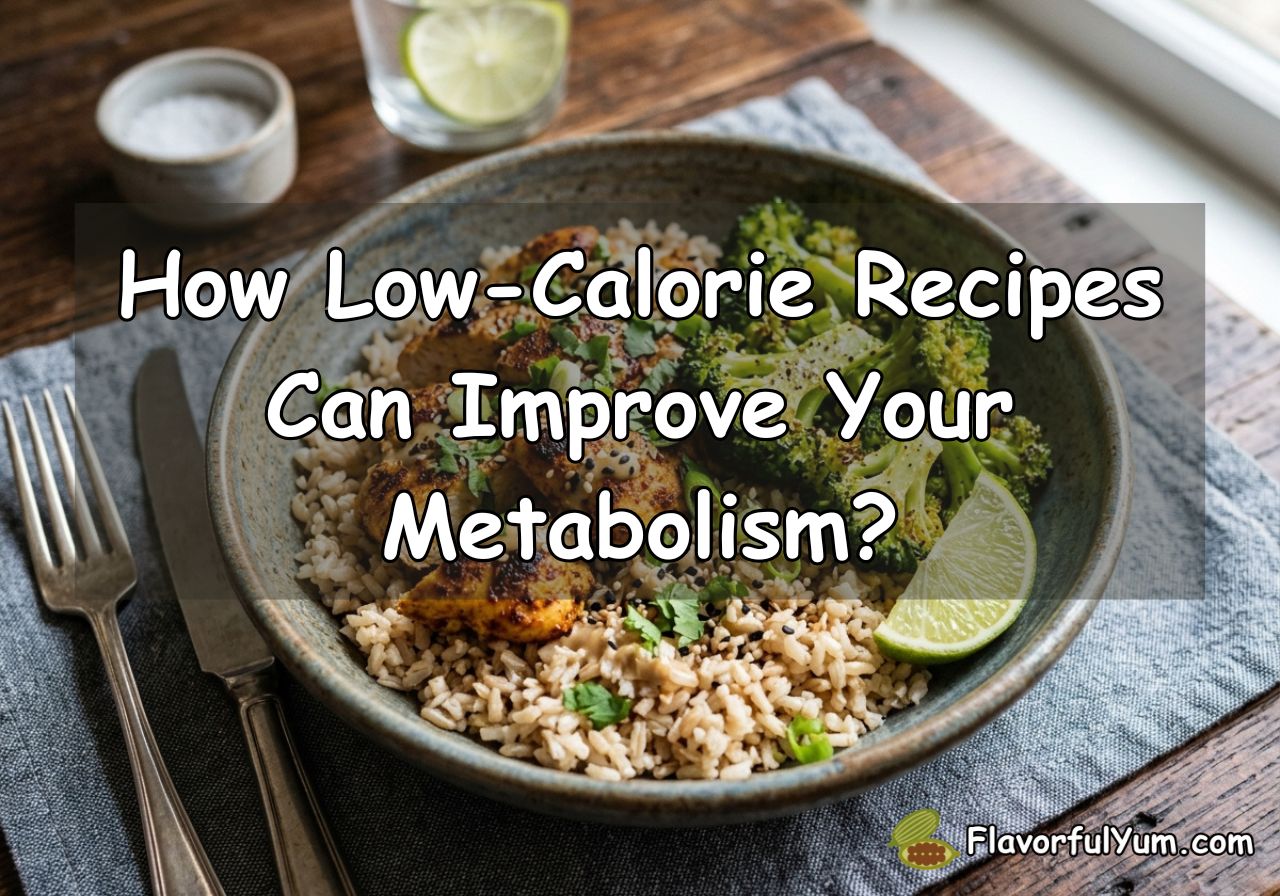
Metabolism gets blamed for everything. Slow weight loss, low energy, stubborn fat — the answer is always “my metabolism is slow.” What most people don’t realize is that metabolism responds directly to what you eat, how often you eat, and the specific nutrients your food delivers.
Low-calorie eating has a complicated reputation. Done poorly, it slows metabolism down by triggering starvation responses that make your body hold onto every calorie it gets. Done correctly — with the right foods, the right nutrients, and adequate protein — low-calorie eating actively supports a faster, more efficient metabolism.
This article explains exactly how that works and gives you six practical recipes that put the science into action without requiring complicated cooking or expensive ingredients.
What Metabolism Actually Means?
Metabolism is not one single process. It’s the collective term for every chemical reaction your body runs to keep you alive and functioning — breathing, circulating blood, digesting food, repairing cells, and generating energy.
Your basal metabolic rate (BMR) is the number of calories your body burns at complete rest just to maintain basic functions. This accounts for roughly 60–70% of your total daily calorie burn. Physical activity adds another 20–30%, and digesting food — called the thermic effect of food — accounts for the remaining 10%.
When people say they want to boost their metabolism, they generally mean increasing how many calories their body burns across all three of these categories. Food choices directly influence all three.
How Low-Calorie Eating Affects Metabolism?
The relationship between calorie intake and metabolism is more precise than most people realize.
Severe calorie restriction slows metabolism. When calorie intake drops too low — typically below 1,200 calories for women or 1,500 for men — the body interprets this as a threat. It reduces BMR by conserving energy, breaks down muscle tissue for fuel, and increases hunger hormones to drive eating behavior. This is the metabolic slowdown most crash dieters experience.
Moderate calorie reduction with high protein preserves and supports metabolism. Eating slightly below your maintenance calories while consuming adequate protein keeps muscle tissue intact. Muscle is metabolically active tissue — it burns more calories at rest than fat tissue does. Protecting muscle during a calorie deficit directly protects your metabolic rate.
Specific foods increase the thermic effect of food. Protein requires significantly more energy to digest than carbohydrates or fat — roughly 20–30% of protein’s calories go toward digestion itself. Foods high in fiber, capsaicin, and certain antioxidants also increase metabolic activity in measurable ways.
Meal timing and frequency matter less than total intake. Despite popular belief, eating six small meals does not meaningfully boost metabolism compared to three larger ones. What matters is total daily protein, total daily calories, and food quality across the day.
The Best Low-Calorie Ingredients for Metabolism Support
Before the recipes, here are the specific ingredients that earn their place in a metabolism-supporting low-calorie diet.
Lean protein sources: Chicken breast, turkey, eggs, Greek yogurt, cottage cheese, canned tuna, and legumes. Protein’s high thermic effect means your body burns more calories just digesting it.
High-fiber vegetables: Broccoli, spinach, zucchini, cauliflower, kale, and Brussels sprouts. High fiber slows digestion, stabilizes blood sugar, and keeps metabolism running steadily rather than spiking and crashing.
Metabolism-active spices: Cayenne pepper and chili flakes contain capsaicin, which temporarily increases calorie burn. Ginger and turmeric support metabolic function through anti-inflammatory pathways. Green tea and coffee, when used in cooking or consumed alongside meals, contain compounds that modestly increase metabolic rate.
Complex carbohydrates: Oats, quinoa, sweet potatoes, and brown rice digest slowly, providing sustained energy without blood sugar spikes that disrupt metabolic efficiency.
Healthy fats in controlled portions: Avocado, olive oil, and nuts support hormone production that regulates metabolism — particularly thyroid hormones which directly control metabolic rate.
How to Build a Low-Calorie Metabolism-Boosting Meal?
Every recipe below follows the same framework. Understanding this framework lets you build your own combinations beyond this list.
50% of the plate: Non-starchy vegetables. These provide volume, fiber, and micronutrients at very low calorie cost. You eat more food, feel fuller, and consume fewer calories simultaneously.
30% of the plate: Lean protein. This is the most important component for metabolism support. Aim for 25–35g of protein per meal to maximize the thermic effect and protect muscle tissue.
20% of the plate: Complex carbohydrate or healthy fat. This provides sustained energy and supports hormone function without excessive calorie load.
This ratio delivers satisfaction, metabolic support, and calorie control without tracking every gram obsessively.
6 Low-Calorie Recipes That Support Metabolism
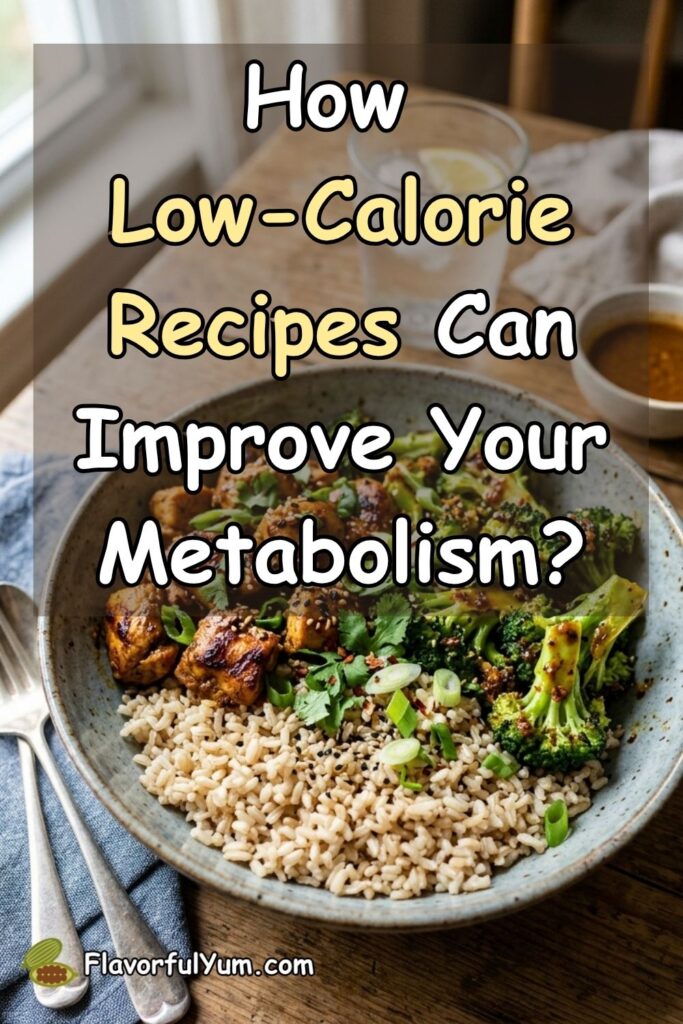
1. Spiced Chicken and Broccoli Bowl (320 calories)
Lean chicken breast, metabolism-activating spices, and high-fiber broccoli in one bowl. This hits 35g of protein per serving while staying well under 350 calories.
Ingredients:
- 200g chicken breast, sliced thin
- 2 cups broccoli florets
- 1 tsp smoked paprika
- 1 tsp cumin
- ½ tsp cayenne pepper
- 2 garlic cloves, minced
- 1 tbsp olive oil
- ½ cup cooked brown rice
- Salt and pepper to taste
- Lemon juice for serving
Instructions:
- Season chicken slices with smoked paprika, cumin, cayenne, salt, and pepper on all sides
- Heat olive oil in a pan over high heat for 2 minutes
- Add chicken slices in a single layer and cook for 3 minutes without moving
- Flip and cook for another 2 minutes until cooked through — set aside
- Add garlic to the same pan and cook for 30 seconds
- Add broccoli florets and 2 tbsp water to the pan
- Cover and steam broccoli for 4 minutes until bright green and tender-crisp
- Serve chicken and broccoli over brown rice
- Squeeze fresh lemon juice over the bowl before eating
Metabolism note: Cayenne pepper’s capsaicin temporarily increases calorie burn by 4–5% after eating. Combined with chicken’s high thermic effect, this bowl works harder metabolically than its calorie count suggests.
2. Egg White and Spinach Frittata (185 calories)
Egg whites deliver maximum protein at minimum calories. This frittata provides 28g of protein per serving and keeps you full for four to five hours, preventing the energy crashes that disrupt metabolic efficiency.
Ingredients:
- 6 large egg whites plus 2 whole eggs
- 3 cups baby spinach
- ½ cup cherry tomatoes, halved
- ¼ cup red onion, diced
- 2 garlic cloves, minced
- 1 tsp olive oil
- ½ tsp dried oregano
- Salt and pepper to taste
Instructions:
- Preheat oven to 180°C (350°F)
- Whisk egg whites and whole eggs together in a bowl with salt, pepper, and oregano
- Heat olive oil in an oven-safe pan over medium heat
- Add red onion and cook for 3 minutes until softened
- Add garlic and cook for 60 seconds
- Add cherry tomatoes and cook for 2 minutes until they begin to soften
- Add spinach and stir for 90 seconds until completely wilted
- Spread vegetables evenly across the pan
- Pour egg mixture over the vegetables and shake the pan gently to distribute
- Cook on the stovetop for 3 minutes until edges begin to set
- Transfer pan to the oven and bake for 12 minutes until center is fully set and top is lightly golden
- Slice into wedges and serve directly from the pan
3. Zucchini Noodle Shrimp Stir-Fry (240 calories)
Zucchini noodles replace pasta at a fraction of the calories while delivering fiber that supports stable blood sugar. Shrimp provides lean protein with essentially zero fat, making this one of the most calorie-efficient high-protein meals available.
Ingredients:
- 300g shrimp, peeled and deveined
- 3 medium zucchini, spiralized into noodles
- 3 garlic cloves, minced
- 1 tbsp fresh ginger, grated
- 2 tbsp low-sodium soy sauce
- 1 tsp sesame oil
- ½ tsp chili flakes
- 1 tbsp olive oil
- Green onions and sesame seeds for serving
Instructions:
- Pat shrimp completely dry with paper towels and season with salt and pepper
- Heat olive oil in a large pan or wok over high heat
- Add shrimp in a single layer and cook for 90 seconds per side until pink — remove and set aside
- Add garlic and ginger to the same pan and cook for 60 seconds
- Add chili flakes and stir for 20 seconds
- Add zucchini noodles and toss vigorously over high heat for 2 minutes
- Pour soy sauce over the noodles and toss to coat
- Return shrimp to the pan and toss everything together for 60 seconds
- Remove from heat and drizzle sesame oil over the dish
- Serve immediately topped with green onions and sesame seeds
Metabolism note: Zucchini noodles deliver the volume and satisfaction of pasta at roughly 15% of the calories, creating a significant calorie deficit without reducing meal size or satisfaction.
4. Turkey and Lentil Lettuce Cups (275 calories)
Ground turkey and lentils together create a protein and fiber combination that maximizes the thermic effect of food in a single meal. Lettuce cups keep calories low while delivering satisfying crunch.
Ingredients:
- 300g lean ground turkey
- ½ cup red lentils, rinsed
- 1 cup chicken broth
- 1 tsp cumin
- 1 tsp smoked paprika
- ½ tsp turmeric
- 2 garlic cloves, minced
- 1 tbsp olive oil
- 8 large iceberg or butter lettuce leaves
- Lime juice, diced tomato, and fresh cilantro for serving
Instructions:
- Heat olive oil in a pan over medium heat
- Add ground turkey and cook for 6 minutes, breaking into small pieces until no pink remains
- Add garlic and cook for 90 seconds
- Add cumin, smoked paprika, and turmeric and stir for 30 seconds
- Add rinsed lentils and pour chicken broth over the mixture
- Stir to combine and bring to a boil
- Reduce heat, cover, and simmer for 15 minutes until lentils are soft and broth is absorbed
- Season with salt and pepper and squeeze lime juice over the mixture
- Separate lettuce leaves and spoon turkey and lentil mixture into each cup
- Top with diced tomato and fresh cilantro and serve immediately
5. Cauliflower Fried Rice (195 calories)
Cauliflower rice delivers the satisfaction and texture of fried rice at roughly one quarter of the calories. This version includes eggs for protein and a range of vegetables for fiber and micronutrients.
Ingredients:
- 1 large head cauliflower, grated or processed into rice-sized pieces
- 3 large eggs, beaten
- 1 cup frozen peas and carrots
- 3 garlic cloves, minced
- 2 tbsp low-sodium soy sauce
- 1 tsp sesame oil
- 1 tbsp olive oil
- 2 green onions, sliced
- Salt and pepper to taste
Instructions:
- Grate cauliflower using a box grater or pulse in a food processor until it resembles rice grains
- Spread cauliflower rice on a clean kitchen towel and squeeze out as much moisture as possible — dry cauliflower crisps rather than steams
- Heat olive oil in a large pan or wok over high heat until very hot
- Add garlic and cook for 30 seconds
- Add frozen peas and carrots directly to the pan and stir-fry for 3 minutes
- Push vegetables to the side and add beaten eggs to the cleared space
- Scramble eggs quickly, breaking into small pieces as they set
- Add dry cauliflower rice to the pan and toss everything together vigorously
- Cook over high heat for 4 minutes, stirring constantly, until cauliflower is tender and lightly golden in spots
- Add soy sauce and toss to coat evenly
- Remove from heat and drizzle sesame oil over the dish
- Serve topped with sliced green onions
Metabolism note: Replacing white rice with cauliflower saves roughly 180 calories per serving without reducing portion size — making this one of the highest-impact swaps in low-calorie cooking.
6. Spiced Black Bean and Vegetable Soup (210 calories)
Beans are one of the most metabolically supportive foods available. Their combination of protein and resistant starch feeds beneficial gut bacteria, reduces blood sugar spikes, and keeps metabolism running steadily for hours after eating.
Ingredients:
- 2 cans (400g each) black beans, drained and rinsed
- 1 can (400g) diced tomatoes
- 1 litre low-sodium vegetable broth
- 1 large onion, diced
- 3 garlic cloves, minced
- 1 tsp cumin
- 1 tsp smoked paprika
- ½ tsp cayenne pepper
- 1 tbsp olive oil
- 2 cups baby spinach
- Lime juice and fresh cilantro for serving
Instructions:
- Heat olive oil in a large pot over medium heat
- Add onion and cook for 6 minutes until softened and golden
- Add garlic and cook for 2 minutes stirring constantly
- Add cumin, smoked paprika, and cayenne and stir for 60 seconds until spices bloom
- Add black beans, diced tomatoes, and vegetable broth
- Stir everything together and bring to a boil
- Reduce heat and simmer uncovered for 20 minutes
- Use the back of a spoon to roughly mash about one quarter of the beans against the side of the pot — this thickens the soup naturally without adding calories
- Add baby spinach and stir for 90 seconds until wilted
- Season with salt and pepper and squeeze lime juice generously over the pot
- Serve hot topped with fresh cilantro
What to Avoid When Eating Low-Calorie for Metabolism Support
Three common mistakes undermine low-calorie eating’s metabolic benefits.
Cutting calories too aggressively. Dropping below 1,200–1,500 calories consistently triggers metabolic adaptation — your body reduces its calorie burn to match reduced intake. Moderate deficits of 300–500 calories below maintenance produce better long-term results.
Eating too little protein. Low-calorie diets without adequate protein cause muscle loss, which directly reduces metabolic rate. Aim for at least 1.2–1.6g of protein per kilogram of body weight daily.
Avoiding fat completely. Fat supports hormone production including thyroid hormones that regulate metabolic rate. Extremely low-fat eating can reduce thyroid function and slow metabolism. Use healthy fats in controlled portions rather than eliminating them entirely.
Final Thoughts
Low-calorie eating improves metabolism when it’s done correctly — with adequate protein, high fiber, metabolism-supporting spices, and a moderate rather than extreme calorie deficit.
The six recipes above deliver all of these elements in meals that are satisfying, practical, and genuinely good to eat. Start with one this week and build from there. Consistency across weeks and months produces real metabolic change — not any single meal, but the pattern those meals create over time.
Eat well, eat enough, and eat the right things. Your metabolism responds directly to all three.

It’s Eliana Hazel. I’m a 33-year-old wife and mom of two from Tennessee who loves cooking fresh, simple meals for my family. I shop for veggies at Walmart, try new recipes, and add my own twist to make them special. When I’m not in the kitchen, I enjoy yoga, meditation, and catching up with my friends over green smoothies. Here, I share family-tested recipes, easy cooking tips, and a little inspiration to make your kitchen a happy place.
Related Posts

Previous Post
Next Post



Hey, y’all! I’m Hazel!
I’m SO happy you’re here! I’m passionate about cooking fresh, homemade meals for my family and love sharing recipes that are simple, healthy, and full of flavor. Here on my blog, I believe in making food with love, experimenting with ingredients, and turning everyday meals into something special. In short, I believe that cooking at home brings families closer and makes life more joyful. >>> Learn more