
Now Reading: The Role of Protein in Low-Calorie Diets
-
01
The Role of Protein in Low-Calorie Diets
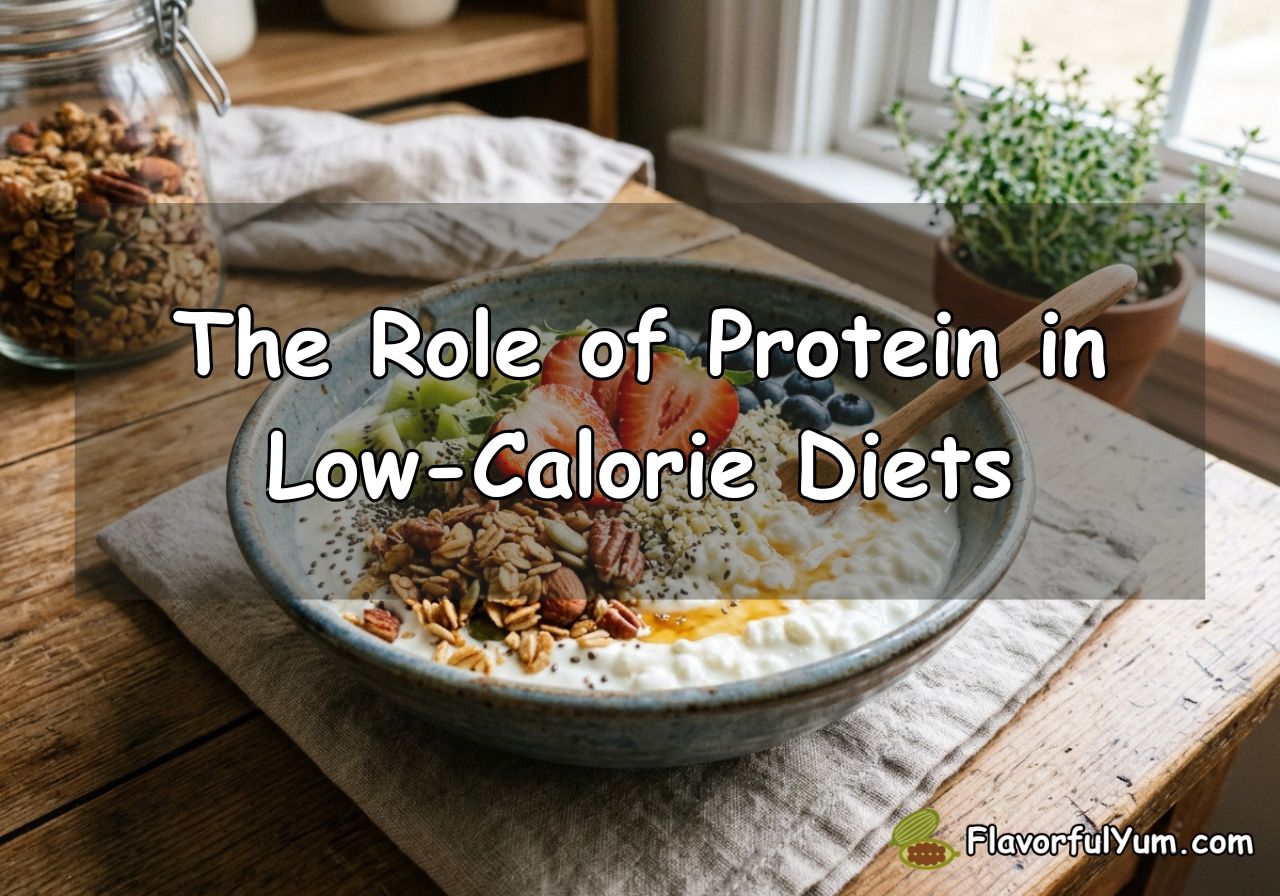
Cutting calories is straightforward in theory. Eat less, create a deficit, lose weight. The reality is more complicated — and the complication almost always involves protein.
Most people who reduce calories do it by eating less of everything proportionally. The result is a diet that creates a calorie deficit while simultaneously reducing the protein that prevents muscle loss, suppresses hunger hormones, and keeps metabolism functioning efficiently. The weight loss happens, but so does the fatigue, the muscle loss, the persistent hunger, and the metabolic slowdown that makes maintaining the loss nearly impossible.
Protein in a low-calorie diet isn’t optional. It’s the variable that determines whether calorie restriction produces sustainable fat loss or a cycle of temporary results followed by inevitable regain.
Why Protein Behaves Differently From Fat and Carbohydrates?
Macronutrients are not interchangeable despite containing similar calorie counts per gram. Each one triggers different hormonal, metabolic, and physiological responses that determine how the body uses and stores the food it receives.
The thermic effect of protein is significantly higher than other macronutrients. Your body burns approximately 20–30% of protein’s calories during digestion and processing — compared to 5–10% for carbohydrates and 0–3% for fat. This means 100 calories of protein effectively delivers only 70–80 net calories after accounting for the energy cost of metabolizing it. In a low-calorie diet where every calorie is carefully managed, this distinction produces measurable differences in daily energy balance without changing total intake.
Protein triggers satiety hormones more effectively than any other macronutrient. Eating protein stimulates the release of peptide YY and GLP-1 — hormones that signal fullness to the brain and suppress ghrelin, the primary hunger-driving hormone. Research consistently shows that high-protein meals suppress appetite for three to five hours more effectively than equivalent-calorie meals built primarily on fat or carbohydrates. In a low-calorie diet where hunger is the primary barrier to adherence, this hormonal effect is the most practically significant benefit protein provides.
Protein preserves muscle tissue during calorie restriction. When calorie intake falls below maintenance level, the body seeks alternative fuel sources beyond stored fat. Without adequate protein, it turns to muscle tissue — a process called catabolism. Muscle loss during calorie restriction reduces basal metabolic rate because muscle is metabolically active tissue that burns calories at rest. Each pound of muscle lost during a low-calorie diet reduces daily calorie burn by approximately six to ten calories — a small number that compounds significantly over months of sustained restriction. Adequate protein intake during calorie restriction provides amino acids that prevent this breakdown and preserve the muscle tissue that keeps metabolism functioning.
How Much Protein Do You Need in a Low-Calorie Diet?
General dietary guidelines recommend 0.8 grams of protein per kilogram of body weight daily for sedentary adults. Research on protein requirements during active calorie restriction consistently recommends significantly higher intakes — between 1.2 and 1.6 grams per kilogram of body weight, with some studies supporting intakes up to 2.2 grams per kilogram for people who exercise regularly during a calorie deficit.
For a person weighing 70 kilograms following a low-calorie diet, this translates to approximately 84–112 grams of protein daily at the moderate end of the range — a target that requires deliberate food choices rather than passive eating.
Distributing protein across the day matters as much as total daily intake. Research on muscle protein synthesis — the process by which the body builds and maintains muscle tissue — shows that the body can optimally use approximately 25–40 grams of protein per meal for synthesis purposes. Eating 100 grams of protein in one meal doesn’t produce the same muscle-preserving effect as distributing that same 100 grams across three or four meals of 25–35 grams each.
This has direct implications for low-calorie diet structure: each meal needs to contain adequate protein rather than concentrating protein in one or two meals and eating minimal protein the rest of the day.
The Best High-Protein, Low-Calorie Foods
The most valuable proteins for low-calorie diets combine high protein density with low calorie cost — providing maximum protein per calorie rather than maximum protein per gram of food.
Egg whites provide 17 grams of protein per 100 grams at only 52 calories — the highest protein-to-calorie ratio of any whole food available. Whole eggs provide 13 grams of protein per 100 grams at 155 calories with the additional benefit of fat-soluble vitamins in the yolk.
Canned tuna in water provides 25 grams of protein per 100 grams at 84 calories — making it the single most calorie-efficient protein source available in a standard supermarket.
Chicken breast provides 31 grams of protein per 100 grams at approximately 165 calories when cooked without added fat. Removing the skin and cooking methods that don’t add fat keep the calorie cost minimal.
Plain Greek yogurt provides 10 grams of protein per 100 grams at approximately 59 calories. Its thickness and creaminess make it one of the most satisfying low-calorie protein sources for snacks and breakfast.
Cottage cheese provides 11 grams of protein per 100 grams at approximately 98 calories alongside significant calcium and casein protein — the slow-digesting form that suppresses hunger for longer than whey-based proteins.
Legumes — lentils, black beans, and chickpeas — provide 7–9 grams of protein per 100 grams cooked alongside significant fiber. The fiber-protein combination produces satiety that calorie-equivalent animal proteins alone don’t replicate.
Shrimp provides 24 grams of protein per 100 grams at only 99 calories — a seafood option with one of the best protein-to-calorie ratios available.
Common Protein Mistakes in Low-Calorie Diets
Reducing protein alongside overall calorie reduction. The most common low-calorie diet mistake. When people cut portions uniformly across all food categories, protein intake falls proportionally. The correct approach cuts calories from fat and refined carbohydrates while maintaining or increasing protein.
Relying on protein bars and shakes as primary sources. Protein bars frequently contain sugar alcohols, artificial sweeteners, and processed ingredients that trigger digestive discomfort and don’t produce the same satiety as whole food protein sources. Whole food protein should form the majority of protein intake with supplements filling genuine gaps.
Eating protein only at dinner. Many low-calorie dieters eat minimal protein at breakfast and lunch, then consume most of their daily protein at dinner. This pattern misses the muscle-preservation and appetite-suppression benefits that come from distributed protein intake throughout the day.
Ignoring protein quality. Not all protein sources are equivalent. Complete proteins — those containing all nine essential amino acids — are more valuable for muscle preservation than incomplete proteins. Animal proteins are complete by definition. Plant proteins require thoughtful combination — rice and beans, hummus and whole grain bread, or oats and nuts — to provide complete amino acid profiles.
4 High-Protein Low-Calorie Recipes
1. Lemon Herb Baked Chicken Breast With Steamed Broccoli
The most calorie-efficient protein meal available. One serving delivers 45 grams of protein at approximately 280 calories — a protein density that no other whole food meal matches at this calorie level.
Ingredients:
- 2 large chicken breasts (approximately 200g each)
- 400g broccoli florets
- 3 tbsp olive oil
- Juice and zest of 1 lemon
- 3 garlic cloves, minced
- 1 tsp dried oregano
- 1 tsp smoked paprika
- Salt and black pepper to taste
- Fresh parsley for serving
Instructions:
- Preheat oven to 200°C (400°F) and line a baking tray with parchment paper
- Place chicken breasts on a cutting board and slice horizontally through the thickest part to create even thickness throughout — this ensures even cooking and prevents the thin end from drying out before the thick end cooks through
- Mix olive oil, lemon juice, lemon zest, minced garlic, oregano, smoked paprika, salt, and pepper together in a small bowl
- Rub the marinade thoroughly over every surface of each chicken breast
- Place chicken on the prepared baking tray and pour any remaining marinade over the top
- Roast for 22–25 minutes until internal temperature reaches 75°C (165°F)
- Rest chicken for 5 minutes before slicing — resting allows juices to redistribute throughout the meat
- While chicken rests steam broccoli florets over boiling water for 5 minutes until bright green and tender-crisp
- Season steamed broccoli with a drizzle of olive oil, salt, and pepper
- Plate sliced chicken alongside broccoli and scatter fresh parsley over everything
Protein note: This single meal provides approximately 45g of complete protein — nearly half the daily protein target for a 70kg person following a moderate-protein low-calorie diet.
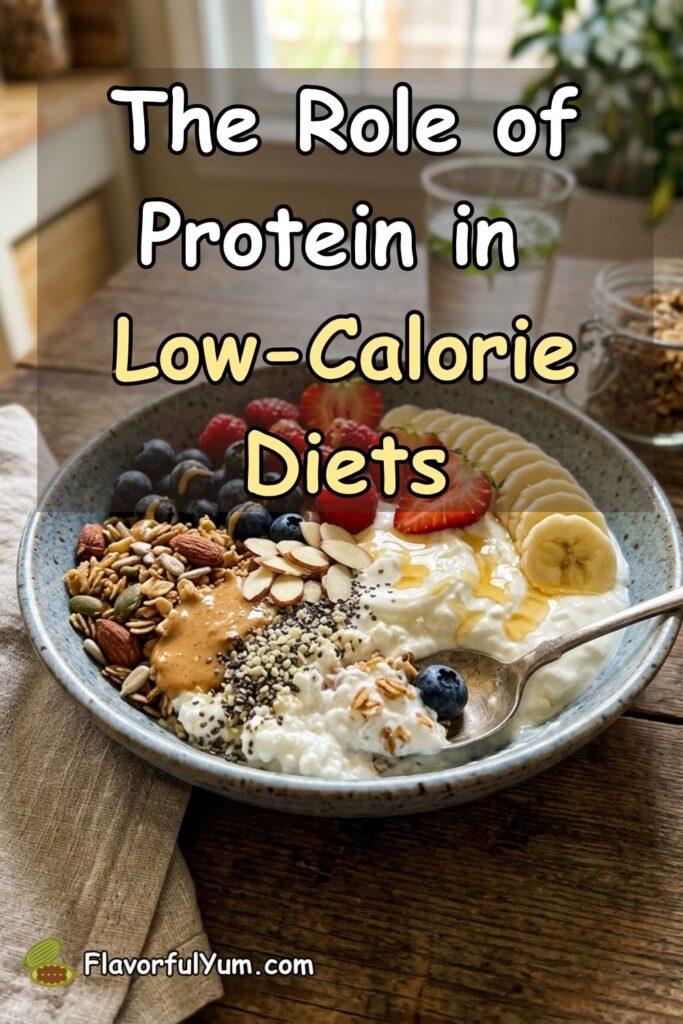
2. Greek Yogurt and Cottage Cheese Protein Bowl
Combining Greek yogurt and cottage cheese doubles the protein density of either ingredient alone while keeping calories well below 300 per serving. This bowl works as breakfast, a post-workout snack, or a light dinner.
Ingredients:
- 1 cup plain full-fat Greek yogurt
- ½ cup low-fat cottage cheese
- ½ cup mixed fresh berries
- 2 tbsp hemp seeds
- 1 tbsp chia seeds
- 1 tsp honey
- ½ tsp vanilla extract
- Pinch of cinnamon
Instructions:
- Stir vanilla extract and cinnamon into Greek yogurt in a mixing bowl until evenly incorporated
- Add cottage cheese to the seasoned yogurt and fold together gently — do not over-mix as keeping some texture contrast between the two dairy components makes the bowl more interesting
- Taste and adjust vanilla and cinnamon as needed
- Spoon the yogurt and cottage cheese mixture into a wide serving bowl
- Create a slight hollow in the center using the back of a spoon — this holds toppings in place
- Arrange mixed berries across the surface of the yogurt mixture
- Sprinkle hemp seeds and chia seeds evenly over the berries
- Drizzle honey in a thin line across the entire bowl
- Dust a final pinch of cinnamon over the top
- Serve immediately or seal and refrigerate for up to 24 hours
Protein note: This bowl delivers approximately 32g of protein at under 300 calories — the Greek yogurt and cottage cheese combination provides both whey and casein proteins for sustained amino acid release.
3. Tuna and White Bean Lettuce Wraps
Canned tuna requires zero cooking and provides the highest protein-to-calorie ratio of any ingredient in this article. Combined with white beans for additional protein and fiber, these wraps deliver 35 grams of protein at approximately 320 calories per serving.
Ingredients:
- 2 cans (160g each) tuna in water, drained
- 1 can (400g) white cannellini beans, drained and rinsed
- 1 cup cherry tomatoes, halved
- ¼ red onion, finely diced
- 3 tbsp fresh parsley, chopped
- 2 tbsp extra virgin olive oil
- Juice of 1 large lemon
- 1 tsp Dijon mustard
- 8 large iceberg or butter lettuce leaves
- Salt and black pepper to taste
Instructions:
- Drain tuna cans thoroughly and flake tuna into a large mixing bowl using a fork — keep some larger chunks intact for texture rather than mashing into a paste
- Add drained white beans to the bowl with the tuna — handle gently to keep beans whole
- Add cherry tomatoes, red onion, and fresh parsley to the bowl
- Whisk olive oil, lemon juice, and Dijon mustard together in a small bowl until emulsified
- Pour dressing over the tuna and bean mixture and fold gently to combine all components without breaking the beans
- Season with salt and pepper and taste — adjust lemon juice and mustard as needed
- Separate lettuce leaves and arrange on a serving plate
- Spoon the tuna and bean mixture generously into each lettuce cup
- Serve immediately with extra lemon wedges on the side
4. Egg White and Vegetable Scramble
Egg whites provide the highest protein-to-calorie ratio of any whole food. This scramble uses three whole eggs and four egg whites to maximize protein while keeping calories well below 300 — adding vegetables for volume, fiber, and micronutrients that make a low-calorie meal genuinely filling.
Ingredients:
- 3 large whole eggs
- 4 large egg whites
- 2 cups baby spinach
- 1 cup cherry tomatoes, halved
- ½ red bell pepper, finely diced
- 2 garlic cloves, minced
- 1 tbsp olive oil
- ½ tsp smoked paprika
- Salt and black pepper to taste
- Fresh chives for serving
Instructions:
- Crack whole eggs and separate additional egg whites into a large bowl
- Whisk whole eggs and egg whites together with smoked paprika, salt, and pepper until completely combined and slightly frothy
- Heat olive oil in a large non-stick pan over medium heat
- Add diced bell pepper and cook for 3 minutes until softened
- Add minced garlic and cook for 60 seconds stirring constantly
- Add cherry tomatoes and cook for 2 minutes until they begin to soften and release their juices
- Add baby spinach and stir for 60 seconds until completely wilted
- Spread vegetables evenly across the pan
- Pour egg mixture over the vegetables and reduce heat to medium-low
- Stir slowly with a silicone spatula every 30 seconds moving eggs from the outer edges toward the center
- Remove from heat when eggs are just set but still slightly glossy — residual heat finishes cooking in 30 seconds
- Slide onto a plate immediately and top with fresh chives
Protein note: Three whole eggs plus four whites provide approximately 33g of complete protein at under 280 calories — the whole eggs contribute fat-soluble vitamins while the additional whites push protein density significantly higher without proportional calorie increase.
Final Thoughts
Protein’s role in low-calorie diets extends beyond simple muscle preservation. It determines whether calorie restriction feels sustainable or miserable, whether metabolism slows or stays efficient, and whether the weight lost comes primarily from fat or from a combination of fat and the metabolically active muscle you need to keep the results permanent.
The practical application is straightforward. Keep calories at your target. Keep protein at 1.2–1.6 grams per kilogram of body weight. Distribute that protein across three or four meals. Choose whole food protein sources over processed alternatives.
These four recipes cover every meal occasion and every hunger level within a low-calorie framework. Start with the tuna lettuce wraps and the egg white scramble this week — both demonstrate how much protein and genuine satiety a sub-300-calorie meal can deliver when protein is the organizing principle rather than an afterthought.

It’s Eliana Hazel. I’m a 33-year-old wife and mom of two from Tennessee who loves cooking fresh, simple meals for my family. I shop for veggies at Walmart, try new recipes, and add my own twist to make them special. When I’m not in the kitchen, I enjoy yoga, meditation, and catching up with my friends over green smoothies. Here, I share family-tested recipes, easy cooking tips, and a little inspiration to make your kitchen a happy place.
Related Posts
Previous Post
Next Post

Hey, y’all! I’m Hazel!
I’m SO happy you’re here! I’m passionate about cooking fresh, homemade meals for my family and love sharing recipes that are simple, healthy, and full of flavor. Here on my blog, I believe in making food with love, experimenting with ingredients, and turning everyday meals into something special. In short, I believe that cooking at home brings families closer and makes life more joyful. >>> Learn more