
Now Reading: Top 5 Nutrients Your Lunch Must Have and How to Get Them
-
01
Top 5 Nutrients Your Lunch Must Have and How to Get Them
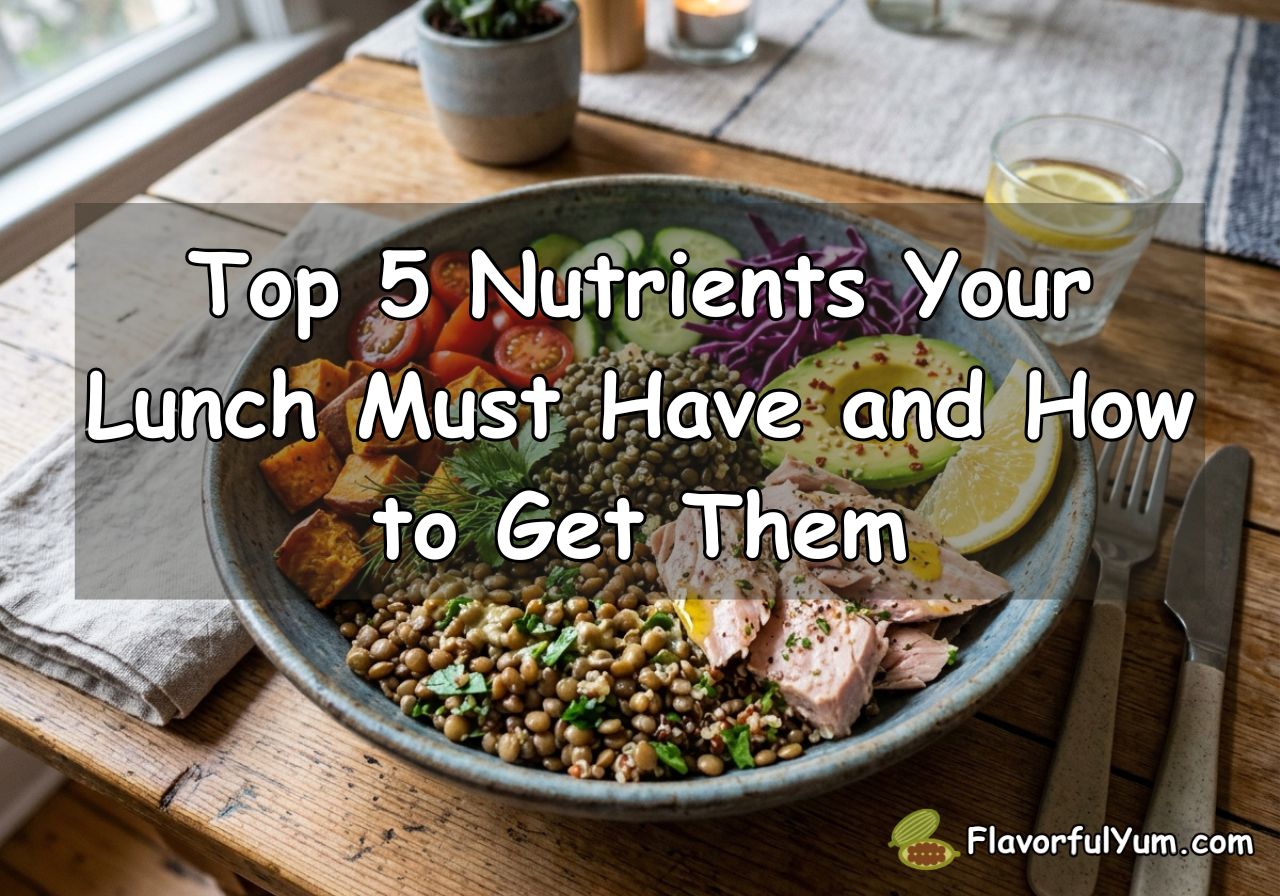
Lunch determines your afternoon. The right nutrients at midday sustain focus, prevent the 3pm energy crash, support immune function through the second half of the day, and bridge the nutritional gap between breakfast and dinner effectively.
Most lunches fail this test — sandwiches built around refined bread, salads with inadequate protein, and convenience meals that deliver calories without meaningful nutritional density. The result is the predictable afternoon slump that most people medicate with caffeine rather than address through better food choices.
These five nutrients change that entirely.

Nutrient 1: Protein — The Afternoon Energy Stabilizer
Protein at lunch is the single most important variable determining afternoon cognitive performance and hunger management. Research on post-lunch cognitive function consistently shows that meals containing adequate protein produce significantly better attention, working memory, and reaction time in the two to four hours following lunch compared to carbohydrate-dominant meals at equivalent calories.
The mechanism involves two parallel pathways. First, protein slows gastric emptying and glucose absorption — preventing the blood sugar spike and crash that produces post-lunch fatigue. Second, protein triggers peptide YY and GLP-1 release — satiety hormones that suppress hunger through the afternoon and prevent the mid-afternoon snacking cycle that disrupts both nutrition goals and focus.
Adequate lunch protein means at least 25–35 grams per meal. Most standard lunch options deliver 10–15 grams — enough to prevent immediate hunger but insufficient to produce the hormonal response that drives sustained afternoon satiety.
Best lunch protein sources: Canned tuna and salmon, chicken breast, hard-boiled eggs, Greek yogurt, cottage cheese, edamame, black beans, and lentils. All provide complete or near-complete protein at calorie costs that fit within a typical lunch portion.
Nutrient 2: Omega-3 Fatty Acids — Brain Function Through the Afternoon
The brain is approximately 60% fat by dry weight — and the specific fats consumed at lunch directly influence cognitive performance in the hours that follow. Omega-3 fatty acids, particularly DHA and EPA from marine sources, maintain the fluidity and function of neuronal membranes and support the neurotransmitter signaling that drives focus, mood regulation, and working memory.
Research connects low omega-3 status with increased afternoon fatigue, reduced attention span, and greater susceptibility to stress-induced cognitive impairment — all conditions that affect afternoon productivity significantly. Consuming omega-3 rich foods at lunch rather than only at dinner means these fatty acids are available during the afternoon hours when cognitive demand is typically highest.
Best lunch omega-3 sources: Wild-caught salmon, canned sardines, canned tuna, walnuts, flaxseeds, hemp seeds, and chia seeds. Two to three servings of fatty fish per week provides adequate EPA and DHA. Plant sources provide ALA — a precursor that converts to EPA and DHA at limited efficiency, making direct marine sources preferable for brain-specific benefits.
Nutrient 3: Fiber — The Nutrient That Prevents the 3pm Crash
The post-lunch energy crash is not inevitable. It is a predictable consequence of consuming lunch meals low in fiber and high in refined carbohydrates — a combination that produces rapid glucose absorption followed by an equally rapid insulin response that drives blood glucose below fasting levels within two hours.
Adequate fiber at lunch interrupts this cycle at its source. Soluble fiber forms a gel in the digestive tract that slows glucose absorption, flattening the glycemic response to any carbohydrate consumed in the same meal. Insoluble fiber increases meal bulk and extends gastric emptying time, both of which contribute to sustained fullness and stable blood glucose through the afternoon hours.
Lunch should contain at least 8–10 grams of fiber — a target most standard lunch options fall significantly short of.
Best lunch fiber sources: Legumes lead every fiber ranking — one cup of cooked lentils provides 16 grams of fiber. Avocado provides 10 grams per fruit. Vegetables including broccoli, Brussels sprouts, and artichoke hearts provide 4–7 grams per cup. Whole grains including quinoa, farro, and barley provide 5–6 grams per cooked cup.
Nutrient 4: Iron — Oxygen Delivery for Sustained Afternoon Energy
Iron deficiency produces fatigue, difficulty concentrating, and reduced physical endurance — symptoms that closely resemble the afternoon slump and frequently go unrecognized as nutritional in origin. Iron is the mineral component of hemoglobin — the protein that carries oxygen from the lungs to every cell in the body including brain cells. Inadequate iron means inadequate oxygen delivery, which directly limits the energy production capacity of every organ system.
Consuming iron at lunch alongside vitamin C sources — the most effective absorption enhancer available — produces significantly higher iron absorption than consuming iron at meals without vitamin C. This combination transforms a standard lunch into an opportunity to meaningfully improve iron status over weeks of consistent eating.
Best lunch iron sources: Lentils provide 6.6mg per cooked cup — 37% of daily requirements. Canned beans, fortified grains, pumpkin seeds, and spinach all provide significant iron. Pair any plant-based iron source with a vitamin C-rich food — bell peppers, tomatoes, citrus, or strawberries — to maximize absorption.
Nutrient 5: B Vitamins — The Energy Metabolism Cofactors
B vitamins — particularly B1 (thiamine), B2 (riboflavin), B3 (niacin), B6, B9 (folate), and B12 — function as essential cofactors in the cellular machinery that converts food into usable energy. Without adequate B vitamins, glucose, fat, and protein cannot be efficiently metabolized into ATP — the energy currency that powers every cellular process.
Consuming B vitamins at lunch matters because energy metabolism runs continuously rather than only during the hours immediately after eating. B vitamins consumed at breakfast are substantially depleted by midday — replenishing them at lunch supports continuous energy production through the afternoon rather than relying on the morning meal’s supply to last all day.
Best lunch B vitamin sources: Eggs provide B2, B12, and B6 in significant quantities. Whole grains provide B1, B2, and B3. Leafy greens provide folate. Legumes provide folate and B6. Nutritional yeast — easily added to salads, soups, and grain bowls — provides all eight B vitamins in concentrated form and represents one of the most efficient ways to cover the entire B vitamin spectrum in a single ingredient.
2 Lunch Recipes That Deliver All 5 Nutrients
Recipe 1: Tuna and Lentil Power Bowl
Ingredients:
- 2 cans (160g each) tuna in olive oil, drained
- 1 cup cooked green lentils
- 1 cup baby spinach
- 1 red bell pepper, diced
- ½ avocado, sliced
- 2 tbsp hemp seeds
- 2 tbsp extra virgin olive oil
- Juice of 1 lemon
- 1 tsp Dijon mustard
- Salt and black pepper to taste
Instructions:
- Combine cooked lentils and baby spinach in a large bowl — the residual warmth from the lentils wilts the spinach slightly which improves its digestibility
- Add drained tuna in large chunks over the lentil and spinach base — flake gently to keep some larger pieces intact for texture
- Add diced red bell pepper and hemp seeds to the bowl
- Whisk olive oil, lemon juice, and Dijon mustard together until emulsified
- Pour dressing over the bowl and toss gently to coat all components without breaking the tuna into paste
- Arrange avocado slices over the top of the dressed bowl
- Season with salt and pepper and serve immediately
Nutrient coverage: Tuna provides protein, omega-3 fatty acids, and B12. Lentils provide fiber, iron, and folate. Red bell pepper provides vitamin C that triples iron absorption. Avocado provides additional fiber and B vitamins. Hemp seeds add omega-3s and complete protein. All five lunch nutrients in one bowl.
Recipe 2: Salmon and Quinoa Salad With Avocado
Ingredients:
- 2 salmon fillets, cooked and flaked or 2 cans (200g) canned salmon, drained
- 1 cup cooked quinoa, cooled
- 2 cups mixed leafy greens — spinach and arugula
- 1 cup cherry tomatoes, halved
- ½ avocado, diced
- 2 tbsp pumpkin seeds
- 1 tbsp nutritional yeast
- 3 tbsp extra virgin olive oil
- 1½ tbsp apple cider vinegar
- 1 tsp honey
- Salt and black pepper to taste
Instructions:
- Spread cooled quinoa across the base of a wide serving bowl — using cooled rather than hot quinoa prevents the leafy greens from wilting prematurely
- Layer mixed leafy greens over the quinoa base
- Add halved cherry tomatoes and diced avocado over the greens — distribute evenly so each portion of the salad contains all components
- Flake cooked or canned salmon over the top of the salad in generous chunks
- Scatter pumpkin seeds and nutritional yeast evenly over the salmon layer
- Whisk olive oil, apple cider vinegar, honey, salt, and pepper together in a small bowl until the dressing emulsifies
- Drizzle dressing over the entire salad just before serving — not before as the greens wilt quickly once dressed
- Toss gently at the table so every component receives an even coating of dressing
Nutrient coverage: Salmon delivers omega-3 fatty acids, complete protein, and B12. Quinoa provides complete protein, B vitamins, and fiber. Pumpkin seeds provide iron and B vitamins. Cherry tomatoes provide vitamin C for iron absorption. Nutritional yeast covers the entire B vitamin spectrum in one tablespoon. Avocado adds fiber and folate. One salad, five nutrients, complete afternoon support.
Final Thoughts
Afternoon energy, focus, and hunger management are nutritional outcomes — not willpower outcomes. When lunch consistently delivers adequate protein, omega-3 fatty acids, fiber, iron, and B vitamins through whole food sources, the afternoon operates differently than it does after a nutritionally thin convenience meal.
Both recipes above take under fifteen minutes to assemble and cover every nutrient on this list simultaneously. Start with the tuna and lentil bowl this week — it requires zero cooking beyond preparing the lentils and builds every afternoon-supporting nutrient into one straightforward bowl.
What you eat at noon determines your 3pm. These five nutrients make that hour work for you rather than against you.

It’s Eliana Hazel. I’m a 33-year-old wife and mom of two from Tennessee who loves cooking fresh, simple meals for my family. I shop for veggies at Walmart, try new recipes, and add my own twist to make them special. When I’m not in the kitchen, I enjoy yoga, meditation, and catching up with my friends over green smoothies. Here, I share family-tested recipes, easy cooking tips, and a little inspiration to make your kitchen a happy place.
Related Posts



Previous Post
Next Post


Hey, y’all! I’m Hazel!
I’m SO happy you’re here! I’m passionate about cooking fresh, homemade meals for my family and love sharing recipes that are simple, healthy, and full of flavor. Here on my blog, I believe in making food with love, experimenting with ingredients, and turning everyday meals into something special. In short, I believe that cooking at home brings families closer and makes life more joyful. >>> Learn more